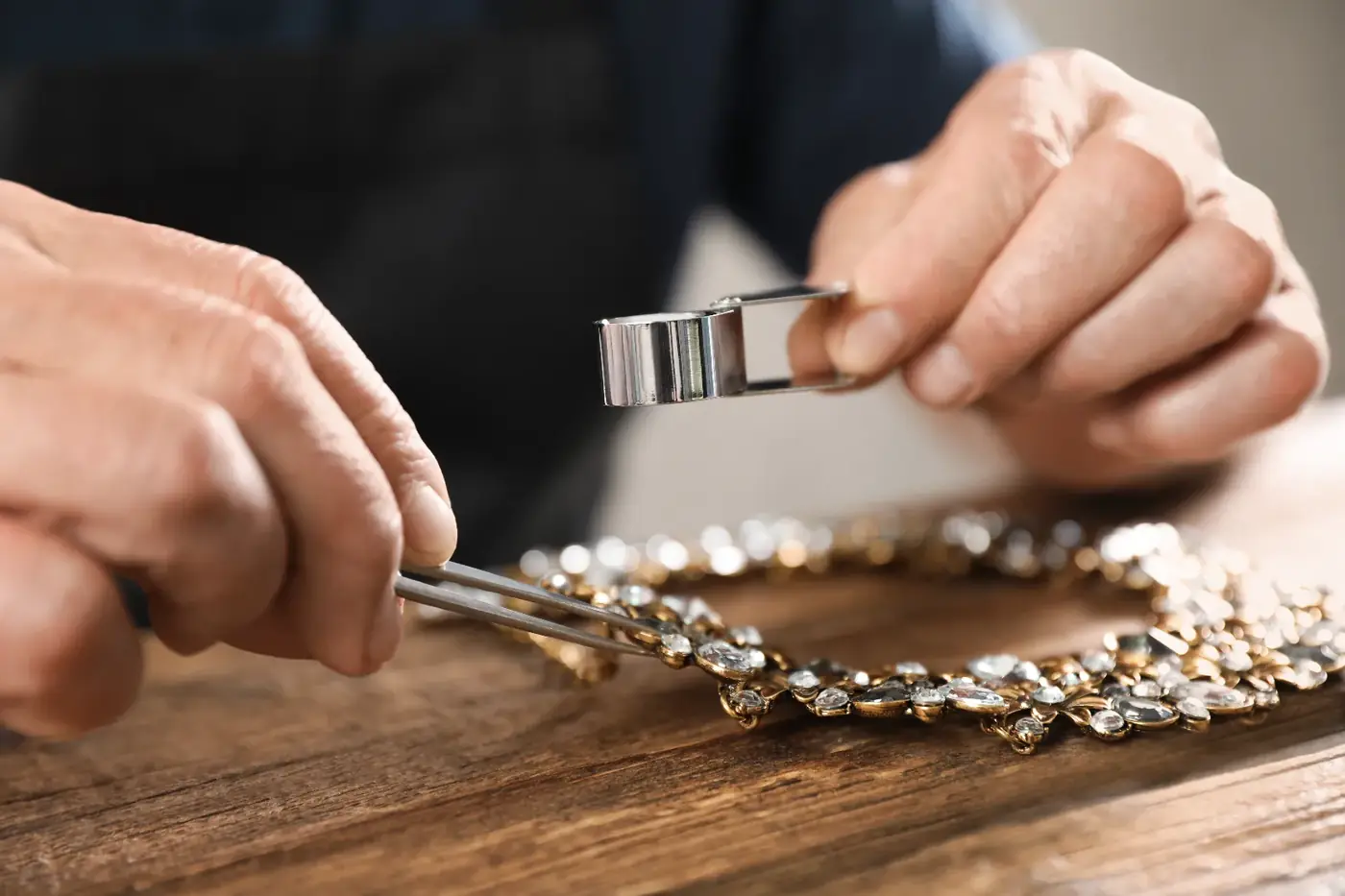
A diamond necklace worn at the right length
A diamond necklace is chosen by length, chain and setting as much as by the stone. We walk through each, then help you try pieces on in Markham.
Length decides how a diamond necklace sits
Necklace length decides where the diamond lands. Guides commonly list a choker at about 14 to 16 inches, a princess at 17 to 19, a matinee at 20 to 24 and an opera at 28 to 36. Sources disagree a little at the edges, so check against your own neck and neckline.
Pick the length by the neckline you wear most. A princess length, around 18 inches, sits at or just below the collarbone and works with most necklines. A matinee drops lower and suits open collars and knits.
Height and build matter too. Longer lengths look good on taller wearers, while a shorter wearer may prefer collarbone length. A pendant should land where you can see it when you look down.
Many chains come with an extender, so one necklace can work at two lengths. We can add one, or shorten a chain, when you bring it in.
| Name | Typical length | Where it sits |
|---|---|---|
| Choker | 14 to 16 inches | Close around the base of the neck |
| Princess | 17 to 19 inches | At or just below the collarbone |
| Matinee | 20 to 24 inches | Between collarbone and bust |
| Opera | 28 to 36 inches | On or below the bust, can be doubled |
What a diamond pendant is, and how it is made
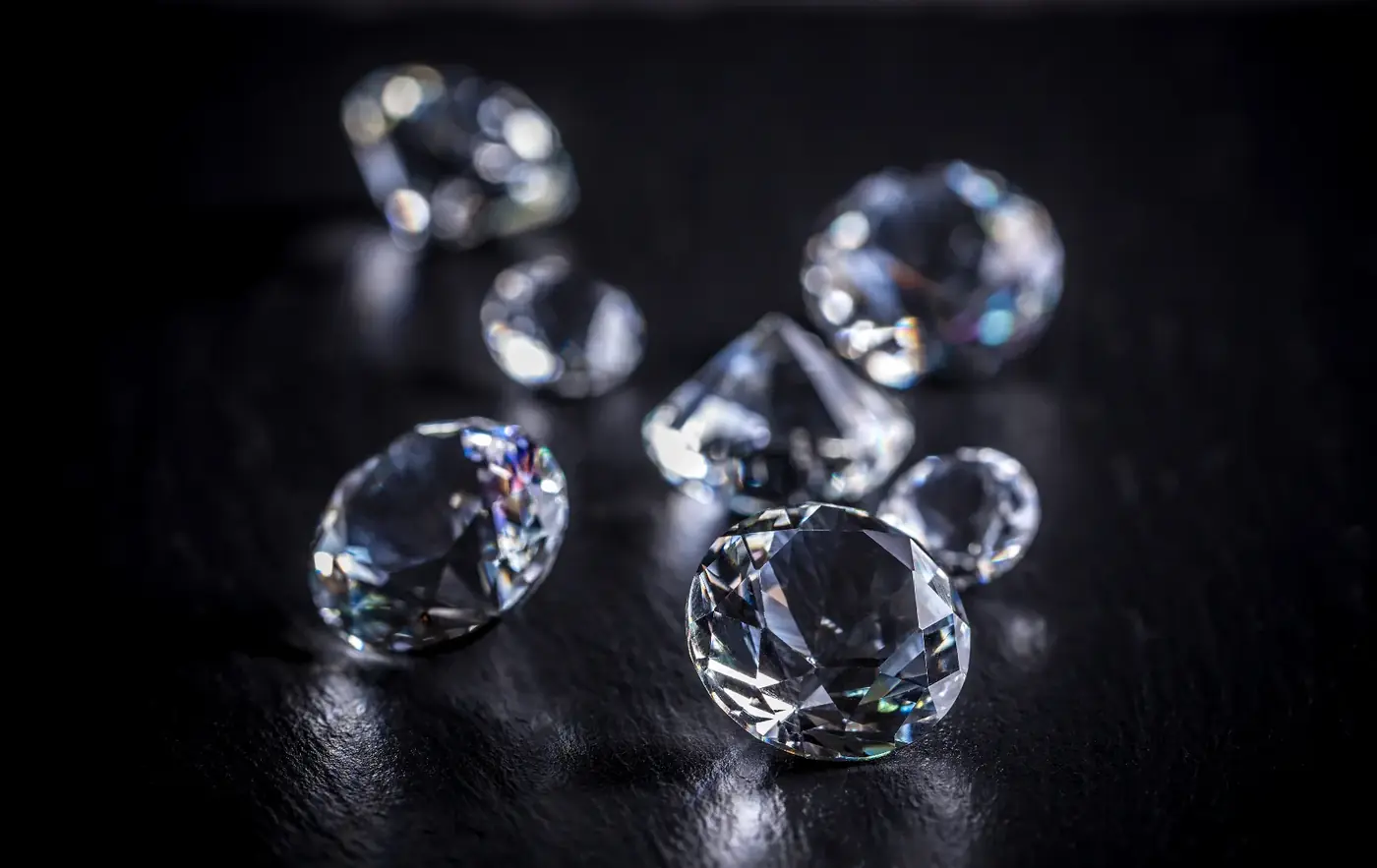
A diamond pendant is a stone, or a group of stones, in a mount that hangs from a chain by a bail. The simplest is a single solitaire. Others use halos, clusters, bars or initials. The setting is chosen for how the diamond faces forward and swings, which is different from a ring.
A pendant is not knocked about like a ring, so it can use a lighter setting. That lets more light reach the diamond from behind. The result is often brighter than the same stone in a ring, and it catches the light each time you move.
The bail is the small loop that connects the pendant to the chain. Check it. A thin bail wears with time, and a chain that fits through it comfortably prevents rubbing.
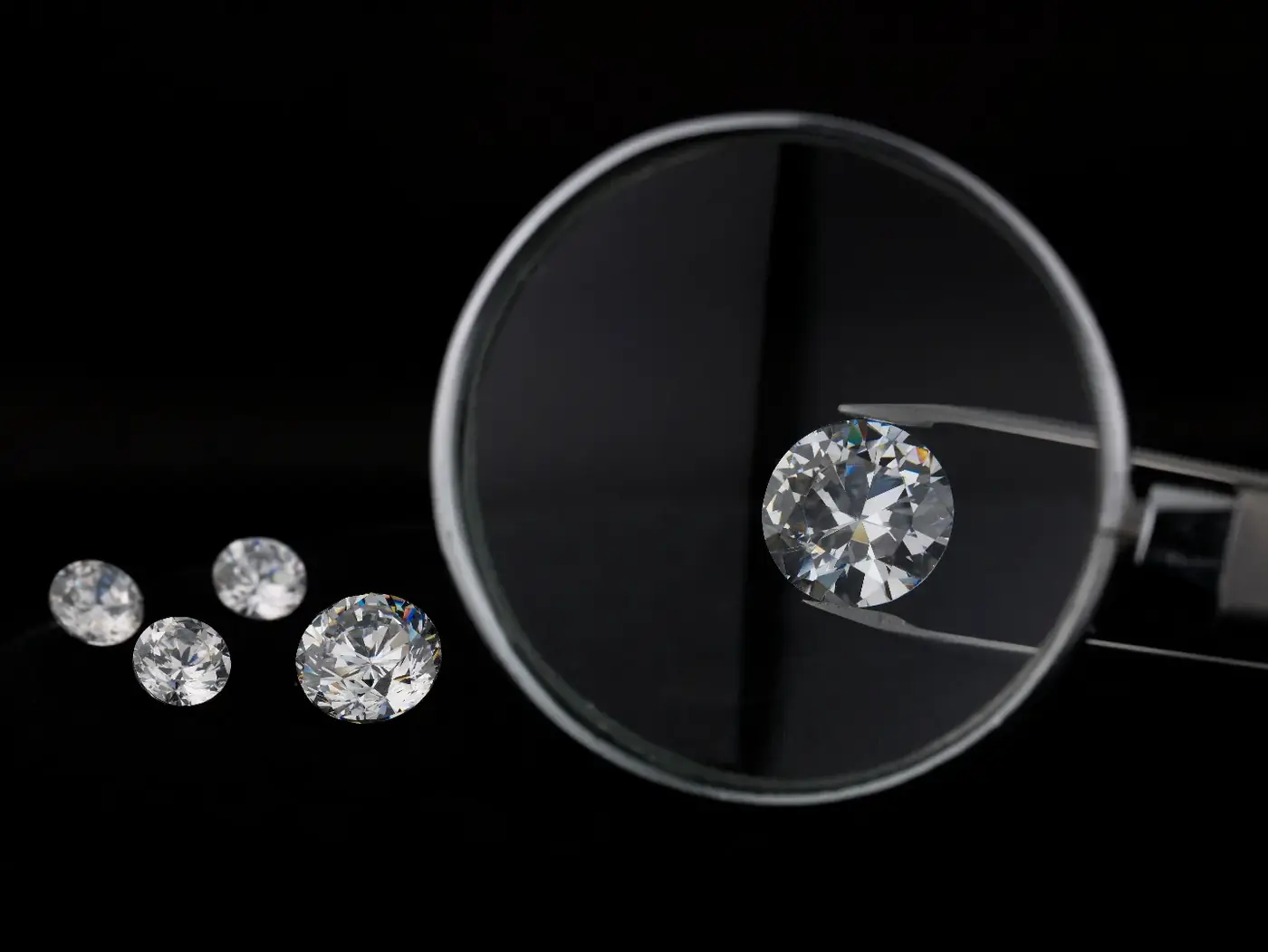
A solitaire pendant is the best way to look at a single diamond's quality. Our 4Cs guide explains what to examine.
A diamond pendant necklace: chain, clasp and weight
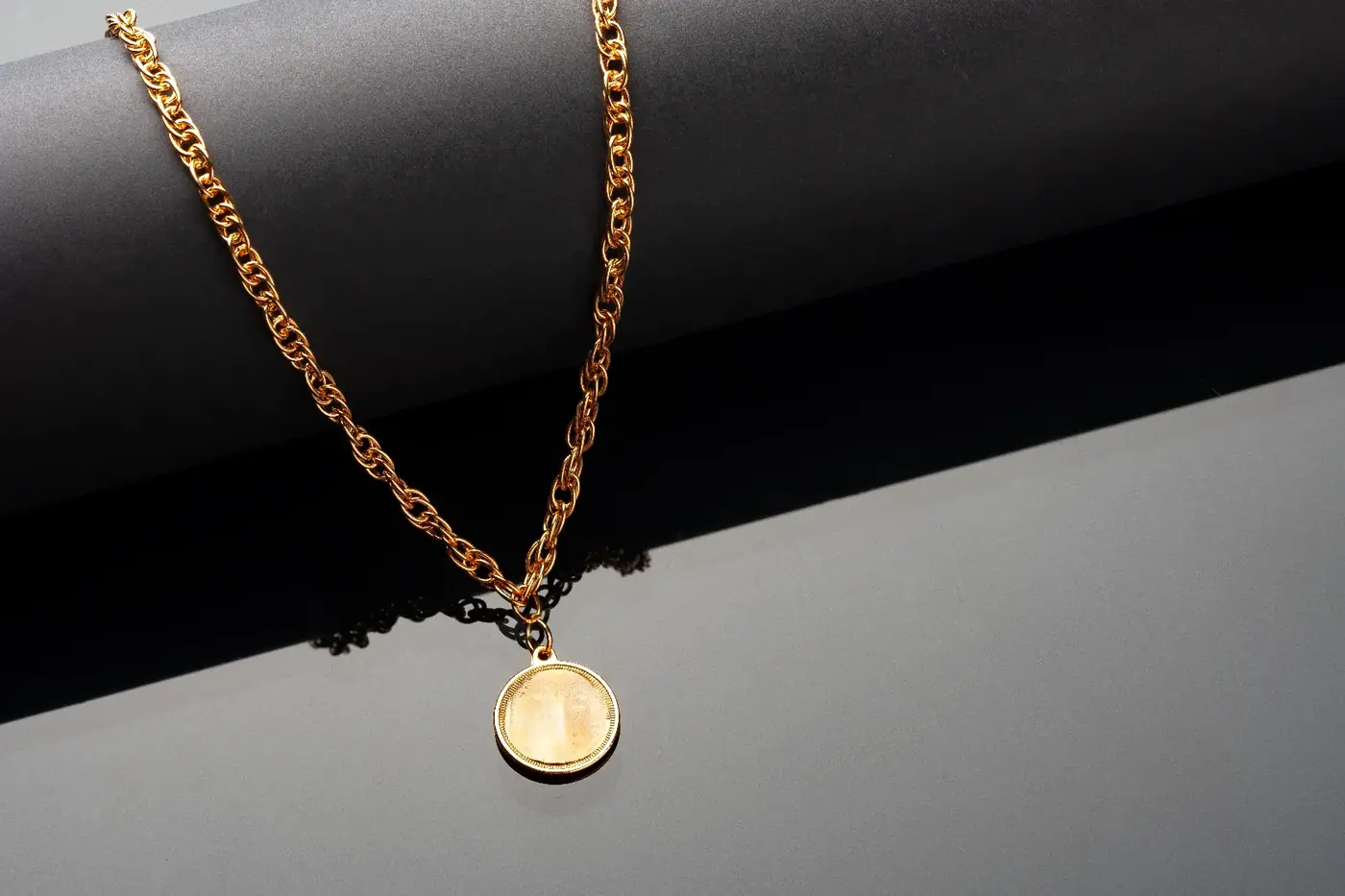
A diamond pendant necklace is two parts that must work together. The chain should be strong enough for the pendant's weight, and the clasp should be secure. Common chains are cable, box and rope. A spring ring or lobster clasp closes most. A heavier pendant needs a sturdier chain.
A fine cable chain is classic with a small solitaire. A box chain is smoother and resists kinking. A rope chain reads richer and holds a larger pendant.
Chain thickness is measured in millimetres, and it should look in proportion to the stone. A thick chain overpowers a small diamond. A thin chain makes a large pendant look at risk.
See our guide to gold chain types for each pattern, and our gold chains page if the chain itself is your focus.
- Cable: round or oval links, the classic
- Box: square links, smooth and kink-resistant
- Rope: twisted links, richer and heavier
- Wheat or Singapore: woven, flexible, shimmering
Choosing a diamond necklace for women: three styles
A diamond necklace for women is usually one of three styles. A solitaire pendant is one stone on a fine chain. A station necklace spaces several stones along the chain. A line or riviera necklace carries a continuous row of stones. Choose by how often, and where, you will wear it.
A solitaire pendant is the daily piece. It looks right at work and at dinner. A station necklace gives a little more presence and moves well with movement.
A line necklace is formal. It needs more stones, careful matching and good fit, and it is closest in construction to a tennis bracelet. Our tennis bracelets page explains that construction.
Metal sets the mood: white gold or platinum for cool brilliance, yellow for warmth, rose for softness.

| Style | Look | Best for |
|---|---|---|
| Solitaire pendant | One stone, simple | Daily wear, first diamond piece |
| Station necklace | Spaced stones, light | Layering, understated sparkle |
| Line necklace | Continuous row | Evenings, formal occasions |
Pairing a necklace with earrings and rings
Pair a necklace with earrings of similar scale. A small solitaire pendant sits well with stud earrings. A longer drop necklace suits simple studs rather than long drops. Matching metal is the easiest rule, and it keeps the set looking deliberate rather than accidental.
You do not need a matched set, and a quiet pair often feels more like you. A diamond pendant and diamond studs in the same metal already read as a pair.
Think about which piece leads. If the necklace is the statement, keep the earrings quiet. If the earrings are bold, wear a short, fine chain.
Our diamond earrings page covers studs and drops. If you are planning a ring, engagement rings is the place to start.

Natural and lab-grown stones in pendants
Both are real diamonds with the same crystal structure and nearly the same properties, per GIA. A pendant is a good place to compare them, since one stone is easy to evaluate. We supply both and label each plainly. The difference is origin, not appearance.
A single diamond means a single decision, and a pendant is a gentle way to begin. You can compare natural and lab-grown stones of the same size and cut side by side.
Colour and clarity are graded the same way for both. We hand-pick diamonds with the highest-quality cuts, and we explain quality against cost so the choice rests on facts and you choose where the cost matters to you.
Read our guide to natural versus lab-grown diamonds before you visit, so you arrive with questions.
Care, repair and valuing a necklace
Take a necklace off to sleep, swim and exercise, since chains tangle and stress the clasp. Store it flat or hung, clasped. We repair necklaces, including broken chains and clasps, and we write jewellery appraisals that give a written description and value for insurance.
Chains break at the clasp or at a thin link. Catch a weak link early and a small repair avoids a lost pendant.
If a diamond looks dull, it is usually dirty. Warm soapy water and a soft brush restore it. See our guide to cleaning jewellery at home.
For repairs, see jewellery repair. For insurance, see jewellery appraisals.
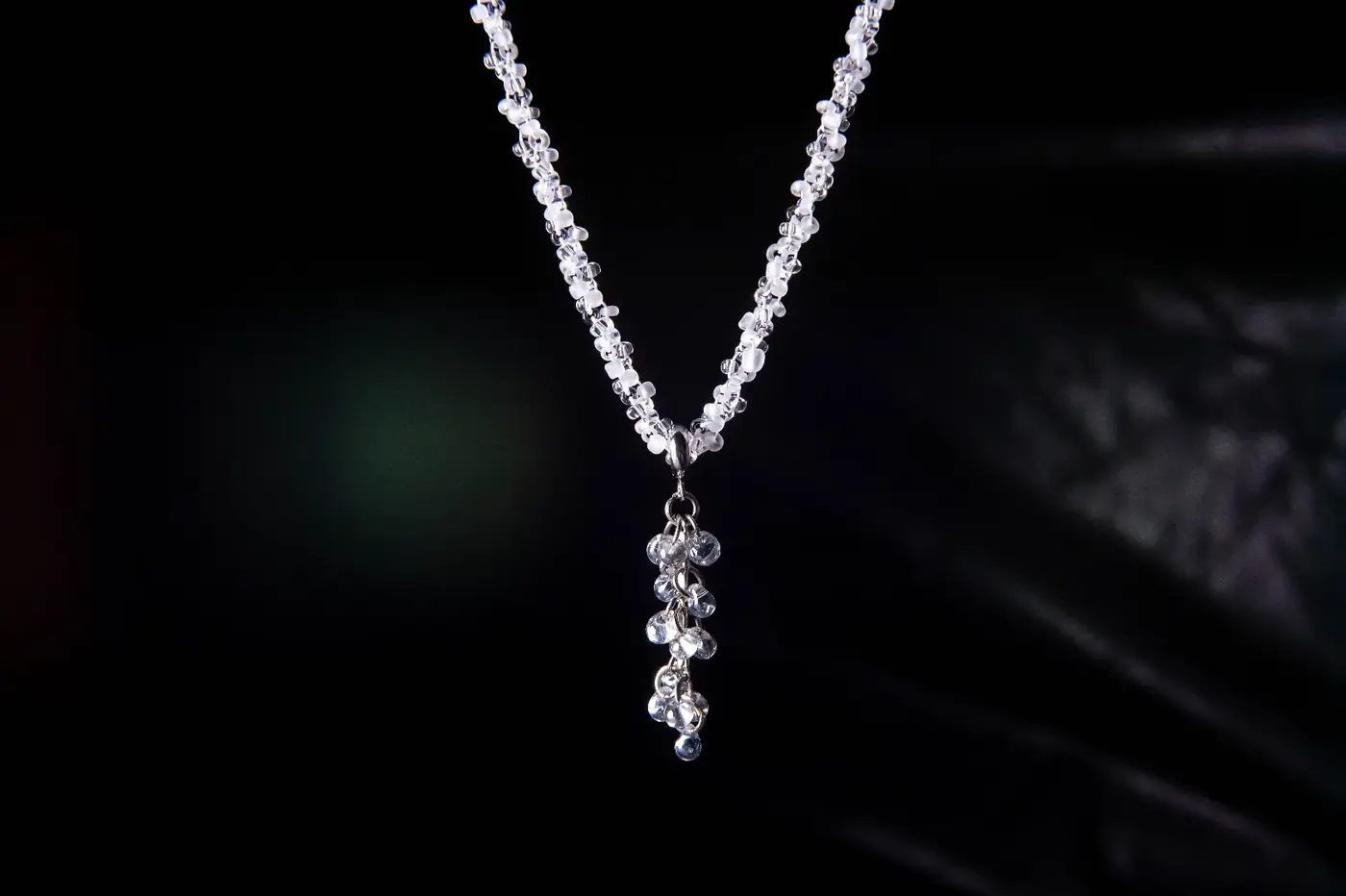
A diamond pendant Toronto shoppers can try on
We are a family-owned jeweller at 7800 Woodbine Ave in Markham, serving Toronto and the GTA for more than 30 years. A pendant looks different on a neck than on a velvet tray. We encourage you to try several and to compare us with other jewellers.
Bring the neckline you wear most. A picture on your phone is enough, and there is no pressure to decide that day. We will show lengths and weights that suit it.
We also make custom jewellery, so a pendant can be designed around a diamond you already own. Our custom jewellery page explains how.
Call (905) 475-1702 or visit 7800 Woodbine Ave. The diamond jewellery collection and the Toronto area page have more.
Questions, answered
What length diamond necklace should I buy?
For most necklines, a princess length of about 18 inches is a safe start. It sits at or just below the collarbone. Choker lengths run 14 to 16 inches and matinee lengths 20 to 24. Guides vary slightly, so try the length on and consider your neckline.
What is the difference between a diamond pendant and a diamond necklace?
A diamond pendant is the hanging piece, a stone or cluster in a mount with a bail. A diamond necklace is the whole piece, including the chain. People use the terms loosely. A line or station necklace is set with stones along the chain itself rather than hanging one pendant.
What chain is best for a diamond pendant necklace?
A fine cable chain suits a small solitaire. A box chain resists kinking. A rope chain holds a heavier pendant. Match thickness to the stone, so neither overpowers the other. Make sure the chain passes through the bail comfortably and the clasp is secure.
What should I look for in a diamond necklace for women?
Look at the cut, since it controls sparkle, then the setting, chain strength and clasp. Decide on style, from solitaire to line necklace, based on where you will wear it. We hand-pick diamonds with the highest-quality cuts and explain quality against cost.
Are lab-grown diamond pendants real diamonds?
Yes. GIA says lab-grown diamonds have the same crystal structure and nearly the same chemical, optical and physical properties as natural ones. We supply lab-grown and natural diamonds and label each plainly. The difference is how the stone formed, and that can affect how it is valued.
Can you fix a broken diamond necklace chain?
Yes, we repair necklaces, including broken chains, worn clasps and loose bails. Bring the piece in and we will look at the damage and tell you what can be done. We can also check the setting of the diamond while it is here.
Where can I find a diamond pendant in Toronto?
We are a family-owned jeweller at 7800 Woodbine Ave in Markham, serving the GTA for more than 30 years. Call (905) 475-1702 to plan a visit and try a diamond pendant on in person. We encourage you to compare with other jewellers as well.
Book a private consultation
Questions about a diamond necklace worn at the right length? Send the form, ring (905) 475-1702, or drop by 7800 Woodbine Ave. A real person writes back, usually within the business day.
7800 Woodbine Ave, Markham, ON L3R 2N7
(905) 475-1702