Gold chain types, from rope to Cuban
Gold chain types differ in how the links interlock, and that decides how a chain drapes, shines and wears. This guide sorts the main styles, then covers length and thickness so you can choose well.
The main gold chain types in one table
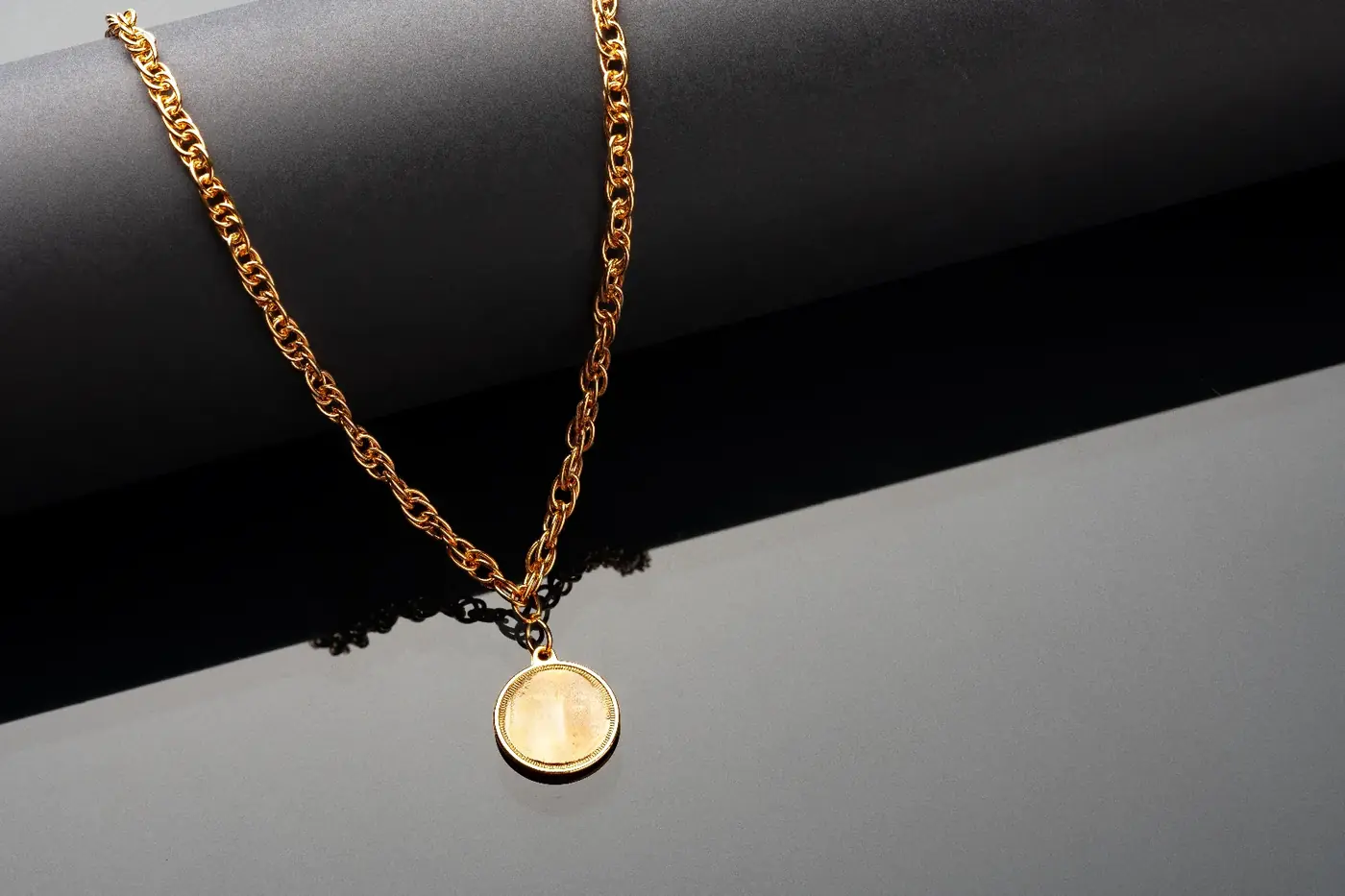
Most gold chain types fall into a handful of families: cable, curb and Cuban, rope, box, snake, figaro and wheat. Each interlocks links differently, which changes flexibility, sparkle and strength. The table gives the look and a practical note for each so you can narrow the choice before you shop.
Browse our full range on the gold chains page, or see how chains pair with pendants in our gold necklaces collection.
| Style | Look | Practical note |
|---|---|---|
| Cable | Round or oval links in a row | Simple, strong, a good base for pendants |
| Curb | Flat, twisted links that lie smooth | Sits flat, works for everyday wear |
| Cuban | Thick, tightly interlocked curb links | Bold, heavy and polished |
| Rope | Twisted strands that spiral like a rope | Catches light from every angle |
| Box | Square links that form a tube | Crisp lines, less flexible |
| Snake | Smooth and tightly jointed | Fluid and sleek, can kink if bent hard |
| Figaro | A repeating pattern of short and long links | Italian in origin, distinctive rhythm |
| Wheat | Braided oval links in a spiral | Soft texture, flexible |
Rope chain vs Cuban chain: how to choose
A rope chain is made of twisted strands that spiral, so it throws light from every angle and drapes softly. A Cuban chain is made of thick, flat, interlocked curb links, so it looks bold and sits smooth against the skin. Choose rope for glitter, Cuban for presence.
Rope reads as textured and lively, the chain that flashes when you turn your head. It also suits a pendant, because the twisted surface holds a bail without scarring.
Cuban reads as confident and solid. Its links lie flat, so the chain stays comfortable even at a heavier width.
Both can be worn alone. Many people own one of each, a rope for dressing up and a Cuban for daily wear.
Cuban link chain styles explained
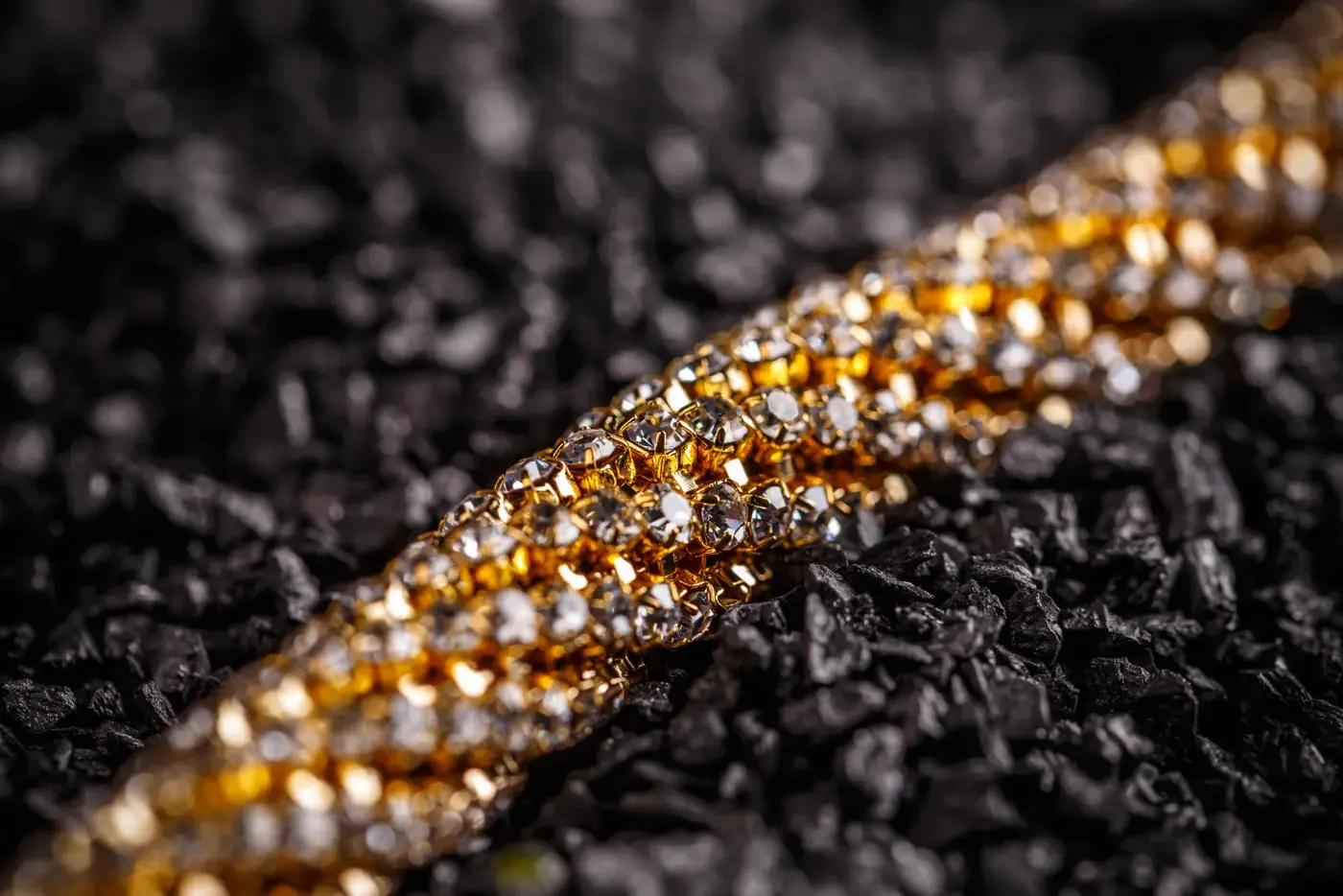
Cuban link chain styles vary by link size, shape and finish. The classic Cuban uses uniform, tightly interlocked curb links. A Miami Cuban packs heavy, polished links closely together, and other versions add a diamond cut face for extra shine. The main differences are link width, surface and whether the links are solid or hollow.
Look closely at how flat the links sit and whether they are hollow or solid. Both affect weight, feel and how the chain wears over time.
Ask how the chain is made, and ask to see the clasp. A strong clasp matters more than most people expect on a heavier chain.
If you wear your chain often, it may need attention. We repair necklaces and bracelets, including chains with broken links, so a favourite you have worn for years does not stay in a drawer.

A gold chain length guide by neckline
Chain length is measured in inches and falls differently on every neck. A 16 inch chain sits at the base of the neck, 18 inches rests on the collarbone, 20 inches falls just below it and 24 inches hangs mid chest. Add a few inches for a pendant to hang where you want it.
Choose from the neckline you wear most. A crew neck suits 18 inches, while a V neck works with 20 or 24.
Men's chains often run 20 to 24 inches, but body type matters more than a rule. Try a few lengths in front of a mirror and see which one feels like yours.
For a precise start point, wrap a soft tape around the neck and add the drop you want. Then compare that number with the lengths in the table.

| Length | Where it sits | Good for |
|---|---|---|
| 16 in | Base of the neck | Close, choker style |
| 18 in | On the collarbone | Everyday wear, small pendants |
| 20 in | Just below the collarbone | Most pendants, open collars |
| 24 in | Mid chest | Layering, bold chains |
| 30 in | At the sternum or below | Long layers, worn doubled |
A gold chain thickness guide in millimetres
Thickness is the width of the chain in millimetres. Fine chains of about 1 to 1.5 mm carry delicate pendants, 2 to 3 mm suits daily wear, and 4 mm and above gives a statement look. Wider chains weigh more and sit more visibly, so match width to your frame and your use.
A very thin chain holds a light pendant well, but can tangle or snap under strain.
Mid width chains balance comfort and presence. They are the ones people tend to wear every day.
Heavy chains stand alone, and you feel their weight settle on the collar. Pair them with a plain clasp and no pendant, and let the links do the work.
| Width | Character | Typical use |
|---|---|---|
| 1 to 1.5 mm | Fine and delicate | Light pendants, layering |
| 2 to 3 mm | Mid weight | Daily wear, medium pendants |
| 4 to 6 mm | Bold | Worn alone, statement chains |
| 7 mm and wider | Heavy | Statement pieces, often Cuban |
Karat, weight and how a chain wears
Karat measures gold purity: 24 karat is pure gold, 18 karat is 75 percent gold, 14 karat is 58.3 percent and 10 karat is 41.7 percent. Higher karat is softer and richer in colour, while lower karat is harder and more resistant to scratches. For a chain worn daily, that balance matters.
A pure gold chain would stretch and scratch easily, so jewellery gold is alloyed with other metals for strength.
Our guide to 10k vs 14k vs 18k gold compares them in more detail. If you ever doubt what a chain is made of, read our advice on telling if gold is real.
A hollow chain is lighter than a solid one of the same width, so look at weight as well as thickness.
Gold colour and finish across chain styles
Gold chains come in yellow, white and rose gold, and the finish changes the look as much as the style. Polished links reflect light sharply, brushed links look softer and diamond cut links sparkle. Pick the colour that matches the rest of your jewellery, and the finish that suits how bright you want the chain to be.
Yellow gold is the traditional choice and looks warm against most skin tones. White gold gives a cooler, silver-like look, and rose gold adds a soft pink warmth.
Diamond cut links have tiny faceted surfaces that flash in movement. They suit rope and curb styles especially well.
Mixing colours is fine when it looks deliberate. A yellow chain with a white gold pendant can look very sharp, so see them together before you decide.
Clasps, care and keeping a chain intact
A chain is only as strong as its clasp and weakest link. Lobster clasps hold well on most chains, while box clasps with safety catches suit heavier styles. Remove chains before sleeping or exercising, store them flat or hanging, and wipe them with a soft cloth to keep the surface bright.
Tangles come from storing chains loose in a box. Close the clasp before putting a chain away.
A kinked snake chain is difficult to straighten, so avoid sharp bends. Rope and Cuban chains tolerate more handling.
For home cleaning, our guide on cleaning jewellery at home keeps the advice simple.
Choosing your chain: a short checklist
Pick the style first, then the length for your neckline, then the width for your frame and use, then the karat and clasp. Try chains on in person if you can. Seeing how a chain drapes, and how it catches light at your neck, beats any specification sheet.
Visit 7800 Woodbine Ave in Markham or call (905) 475-1702, and we will show you the styles side by side and explain the differences plainly. Come and try them on, ask anything, and take your time.
- Decide whether it will carry a pendant or stand alone.
- Match the length to the neckline you wear most.
- Choose width for presence and comfort.
- Check karat, solid or hollow construction and clasp type.
- Compare more than one shop freely. We encourage that.
Questions, answered
What are the main gold chain types?
The main gold chain types are cable, curb, Cuban, rope, box, snake, figaro and wheat. They differ in how links interlock, which changes flexibility, shine and strength. Cable suits pendants, rope catches light, Cuban looks bold, and snake drapes smoothly. Try a few styles on to see which sits best.
What is the difference between a rope chain and a Cuban chain?
A rope chain is made of twisted strands that spiral and throw light from every angle. A Cuban chain uses thick, interlocked curb links that lie flat and look bold. Rope has more sparkle and texture, while Cuban has more presence and a smoother feel against the skin.
What are the main Cuban link chain styles?
Cuban link chain styles include the classic Cuban with uniform curb links, the heavier Miami Cuban with closely packed polished links, and versions with flat or diamond cut faces for extra shine. The main differences are link size, surface finish and whether the links are solid or hollow, which also changes weight and cost.
What length gold chain should I buy?
Choose by neckline. A 16 inch chain sits at the base of the neck, 18 inches on the collarbone, 20 inches just below it and 24 inches mid chest. Add length if you want a pendant to hang lower. Try a few lengths in front of a mirror before you decide.
How thick should a gold chain be?
Pick thickness by use. Chains of about 1 to 1.5 mm suit light pendants, 2 to 3 mm suits daily wear, and 4 mm or more makes a statement. Wider chains weigh more and show more, so match the width to your frame and how often you will wear it.
Can a broken gold chain be repaired?
Usually yes. We repair necklaces, including chains with broken links or worn clasps. Bring the chain to 7800 Woodbine Ave in Markham or call (905) 475-1702, and we will look at it and explain what can be done. Keep any loose pieces so nothing is lost.
Book a private consultation
Questions about gold chain types, from rope to cuban? Send the form, ring (905) 475-1702, or drop by 7800 Woodbine Ave. A real person writes back, usually within the business day.
7800 Woodbine Ave, Markham, ON L3R 2N7
(905) 475-1702