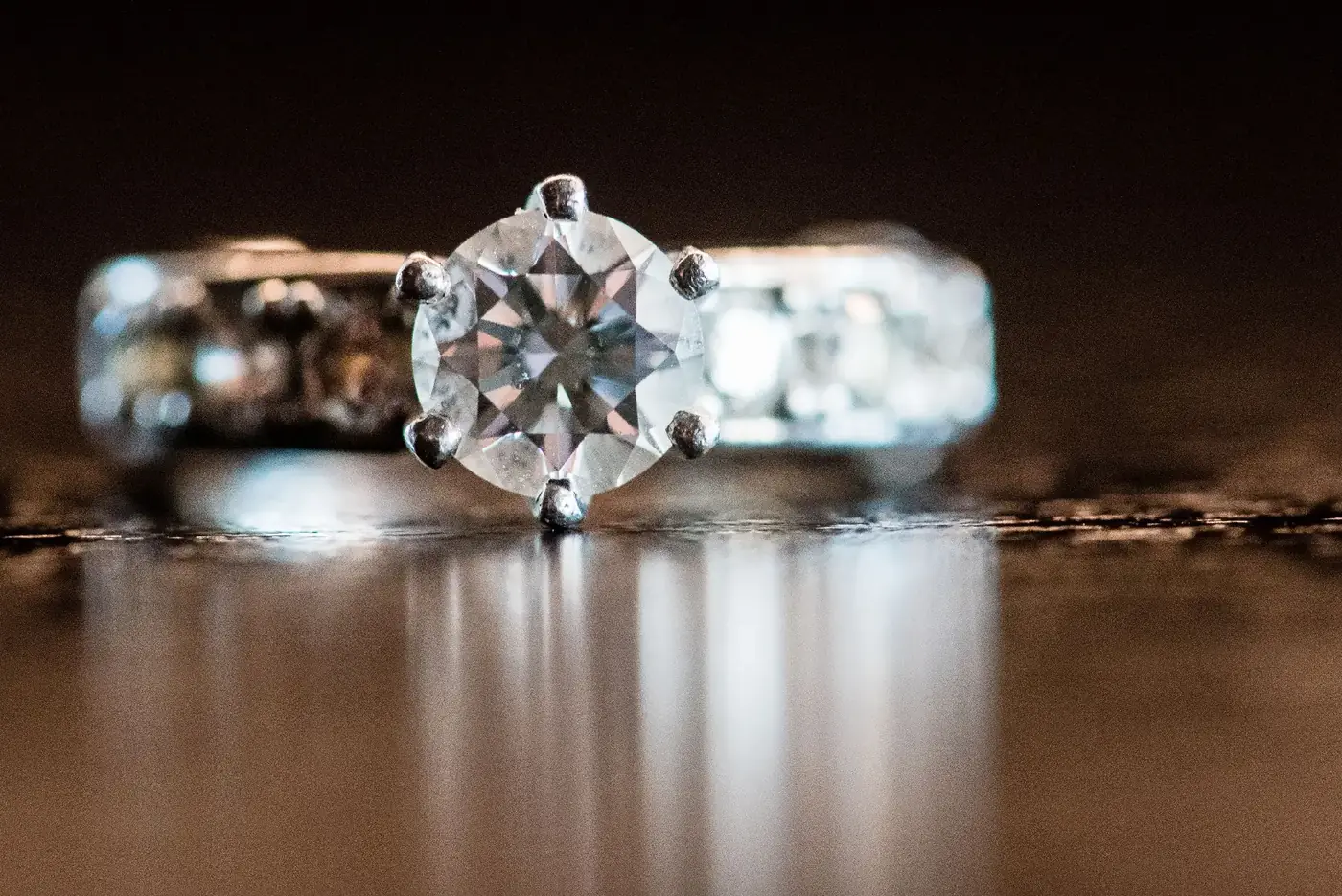
One stone, nothing to hide: the solitaire engagement ring
A solitaire engagement ring is a single diamond on a simple band, and every detail shows. At Lucio's Gold in Markham, we hand-pick the stone and build the setting to match your hand.
What a solitaire engagement ring really is
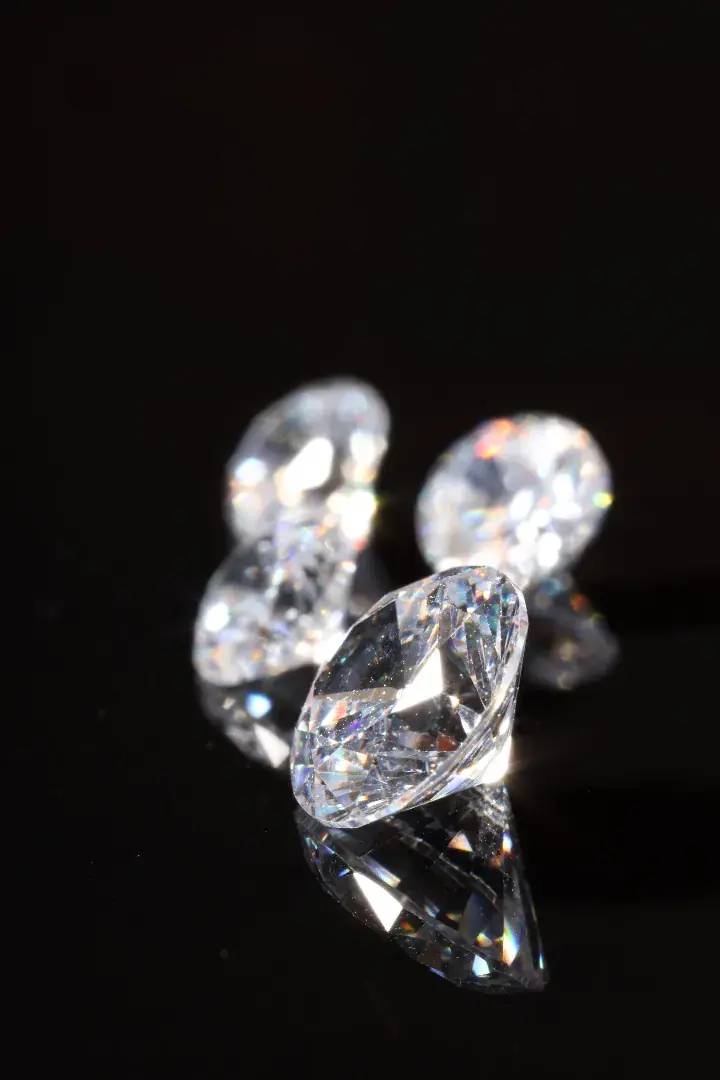
A solitaire engagement ring holds one centre stone and no other diamonds. The band is plain or lightly detailed, so the stone does all the talking. That simplicity is the point, and it is why one stone can hold a whole moment. It also means the diamond's cut, colour and clarity count for more than in busier designs.
There is nowhere for a weak stone to hide. No halo, no side diamonds, no pavé to distract the eye.
That is also why a solitaire is easy to live with for decades. It pairs with almost any wedding band, and it does not date itself with fashion.
If you want to see how it compares with busier styles, our engagement ring styles guide walks through the main families.
When there is only one stone, the stone has to be right.
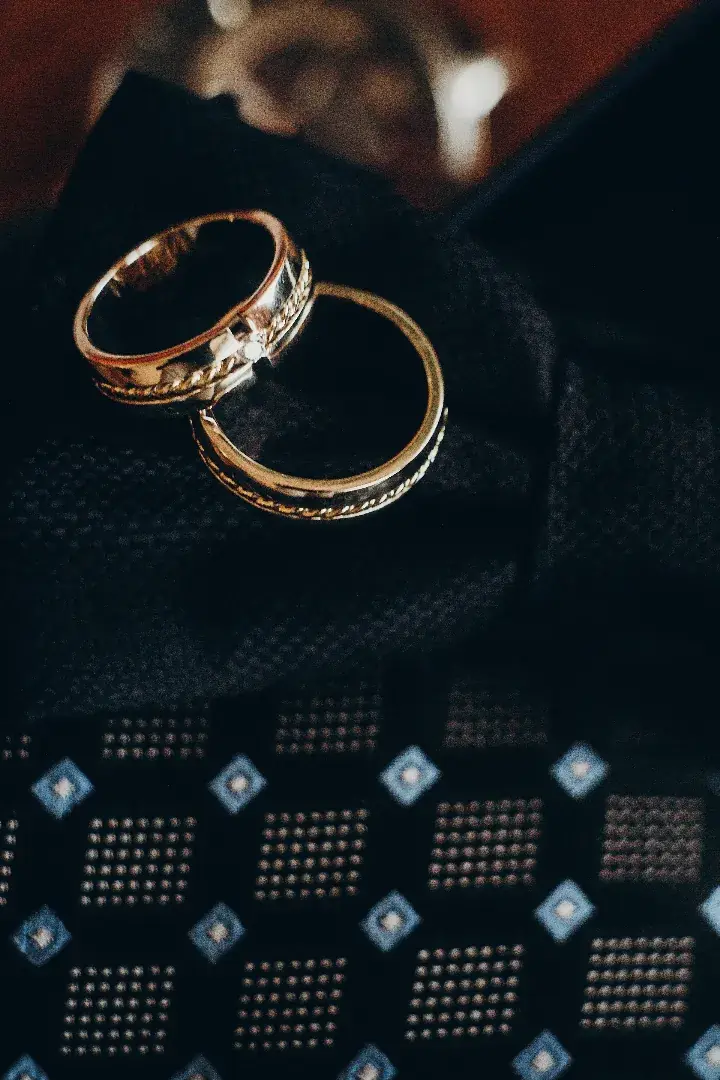
The classic solitaire engagement ring, piece by piece
A classic solitaire engagement ring has three parts: the diamond, the head that holds it, and the shank that wraps the finger. Each part can change the character of the ring. A slim shank looks delicate. A tapered or knife-edge shank adds a sharper line.
A lower head sits close to the finger and snags less. A higher head shows more of the stone's side and lets light enter from the edges.
We talk through these choices with you in plain terms and show you the options in metal. Ask anything, and come and try them on.
- The diamond: chosen first, because everything else is built around it.
- The head: the prongs or bezel that grip the stone and set its height above the finger.
- The shank: the band itself, which can be plain, tapered or finely detailed.
- The finish: polished for brightness, or brushed for a softer feel.
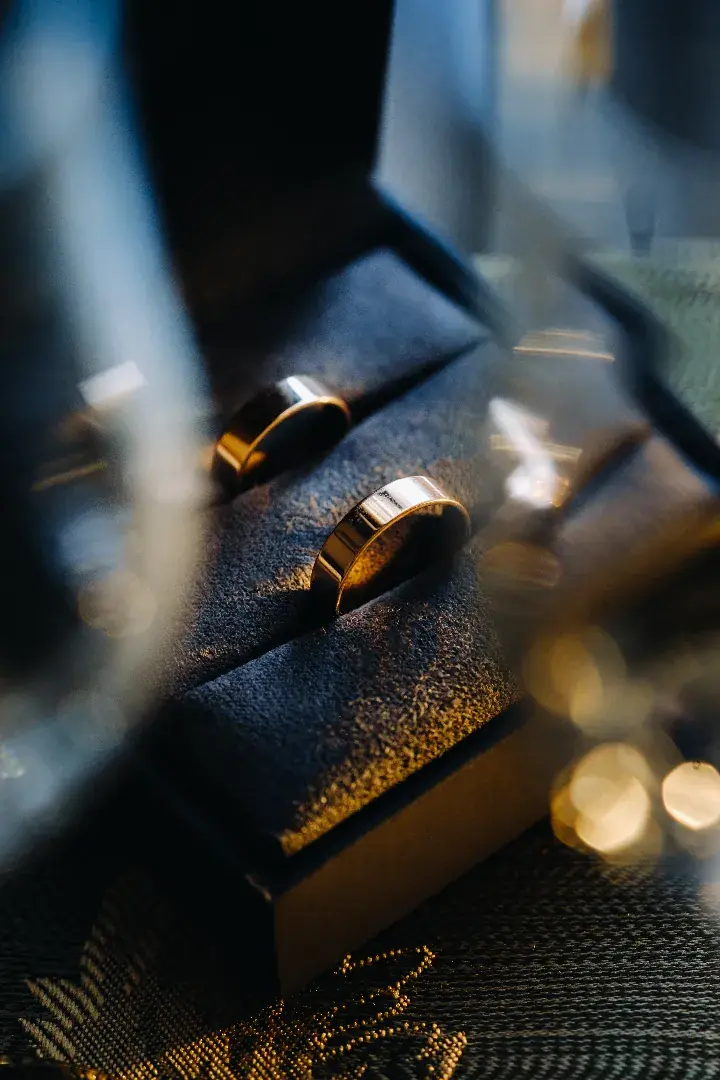
Choosing the solitaire engagement ring diamond
Choose the diamond by looking at it, not only at its report. Cut decides how a stone handles light. Colour and clarity matter, and they matter more in a solitaire because no other stones share the attention. We hand-pick diamonds with the highest-quality cuts and explain the trade-offs honestly.
The 4Cs are carat, colour, clarity and cut. They describe a diamond in four plain terms, and GIA's education pages explain each clearly.
We spend time on quality versus cost. A modest step in one C can free budget for another, and we show you what that looks like on the tray.
Our guide to spending on a ring helps you set priorities before you visit.
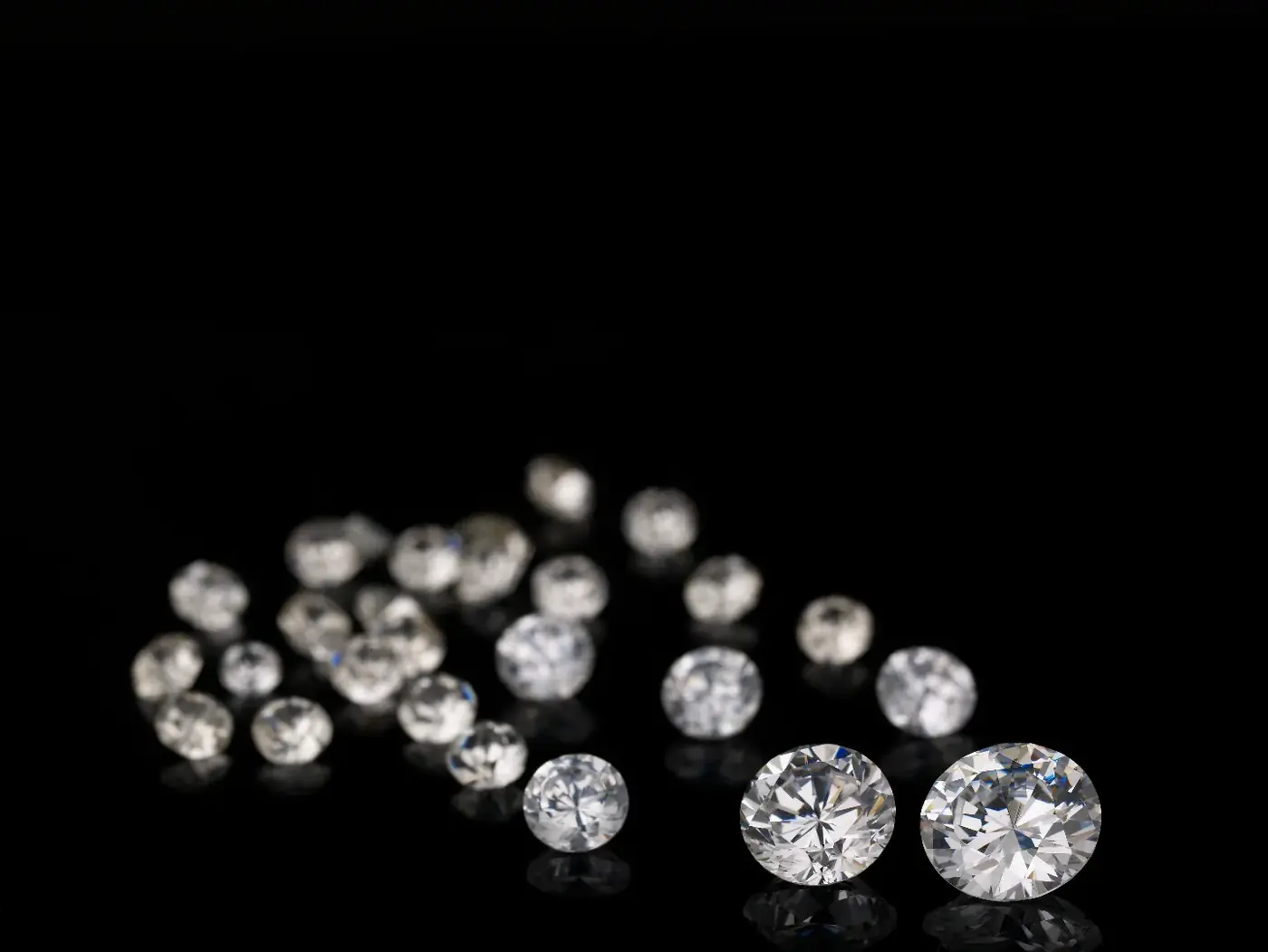
A round solitaire engagement ring: the benchmark shape
A round solitaire engagement ring is the most traditional pairing. The round brilliant has a facet pattern designed to return light in every direction, which is why it dominates solitaire design. It also sits evenly in a four or six prong head, and it looks the same from every side.
Round stones are the only shape that GIA grades with an overall cut grade, which gives you an extra reference point. For fancy shapes, the grading of cut is less direct, so your own eyes matter more.
A round stone also tolerates any wearing angle. It never needs to be turned or aligned.
Other shapes make solitaires too. See our oval engagement rings for a longer line, or our emerald cut engagement rings for a hall-of-mirrors look.
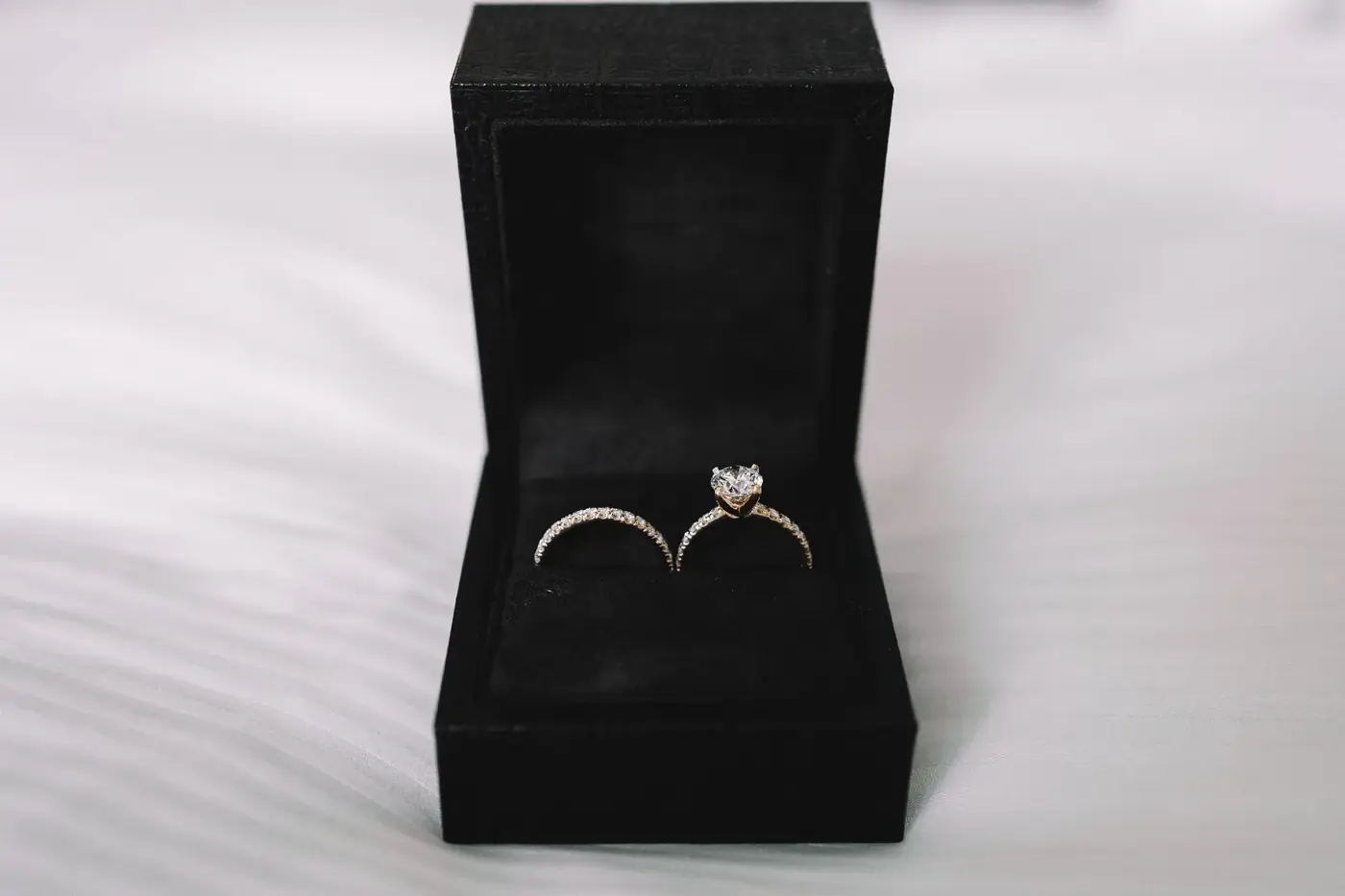
A 1 carat diamond solitaire engagement ring
A 1 carat diamond solitaire engagement ring uses a stone weighing 200 milligrams. Carat is weight, not size, so two one-carat stones can look slightly different on the hand. Cut and proportions change the spread. We compare the millimetre measurements before you decide.
One carat is a popular benchmark, and it is a comfortable weight for daily wear. It is large enough to be noticed and small enough to stay out of the way.
At this size, small differences in colour and clarity are harder to spot with the eye alone. A loupe shows what the eye cannot.
Bring your ideas and any numbers you have collected. We will work through them with you, and you are welcome to compare what you find elsewhere.
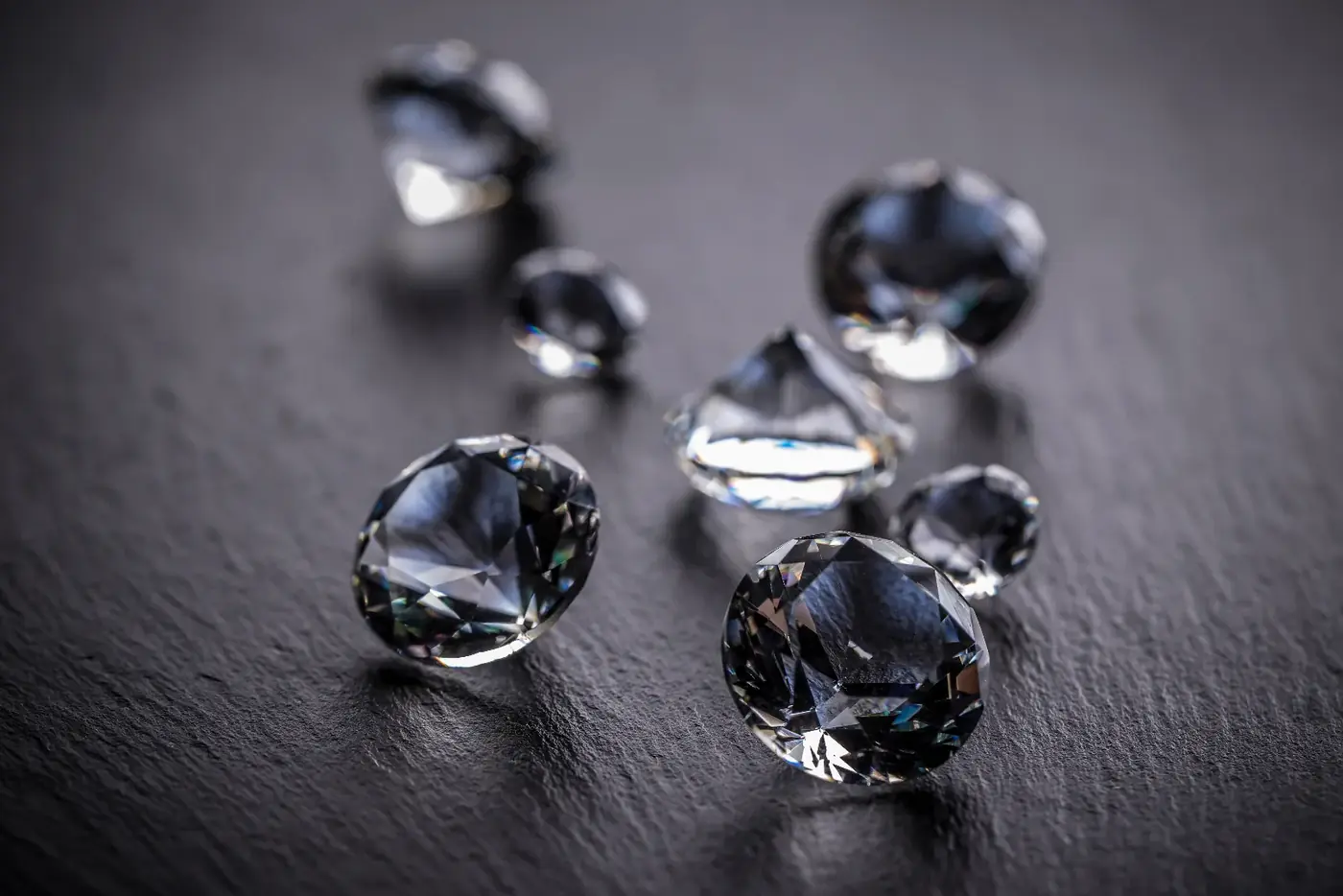
Prongs, bezels and other ways to hold one stone
The way a solitaire is held changes both its look and how it wears. Four prongs show more diamond. Six prongs add security and make a round stone look rounder. A bezel wraps the stone in metal for a smooth profile. We help you choose for your lifestyle.
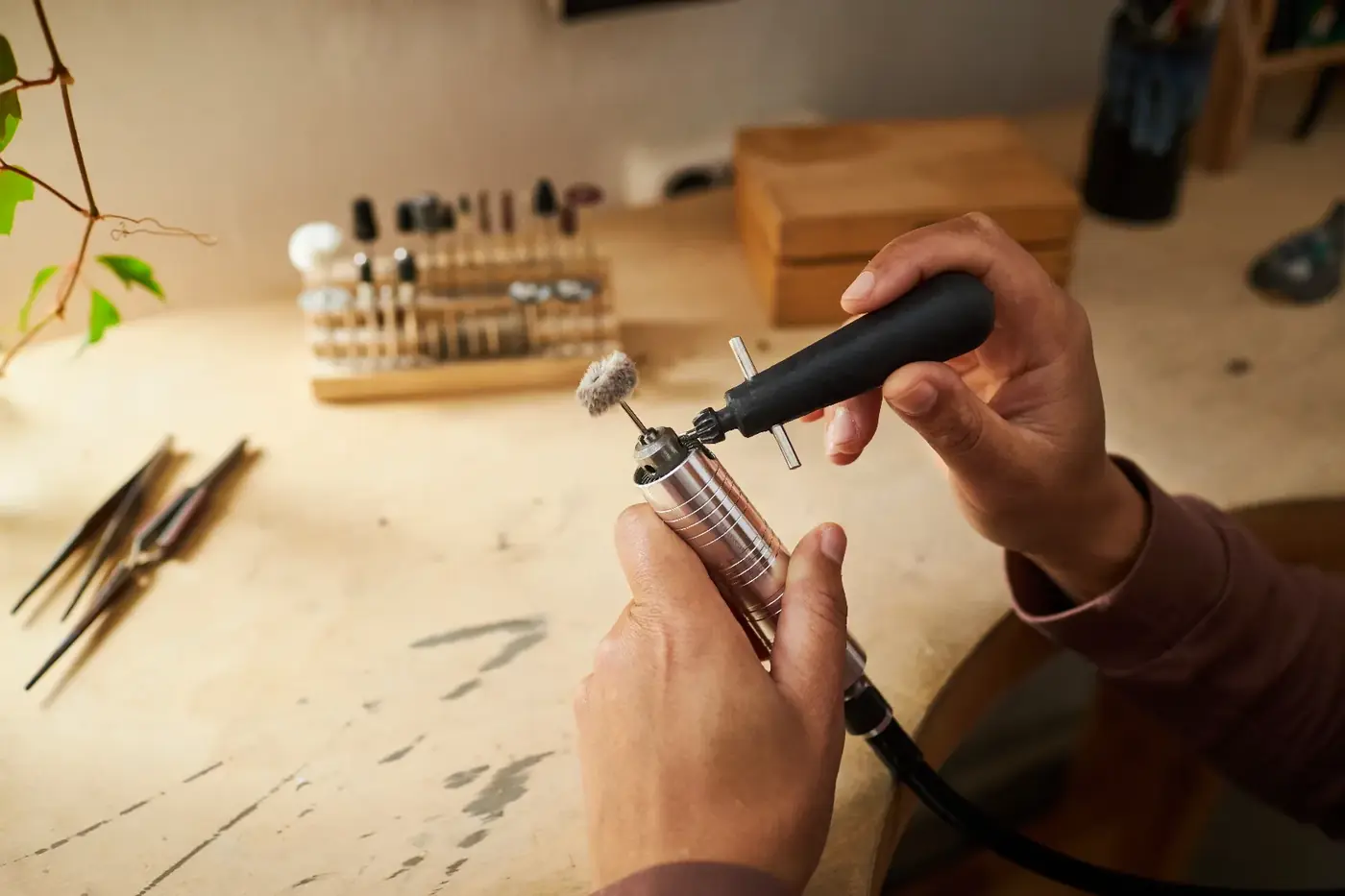
Prongs wear with time, like any small metal part. We inspect and repair them, and we can re-tip or rebuild a head when needed.
| Setting | What you see | Worth knowing |
|---|---|---|
| Four prong | More of the diamond, more light | Less metal, but each prong carries more of the stone |
| Six prong | A rounder look on a round stone | Extra prongs add support if one is worn |
| Bezel | A smooth rim of metal | Covers part of the stone, and suits active hands |
| Cathedral | Arches rising to the head | Adds a lifted look without adding stones |
Living with a solitaire: care and checks
A solitaire is simple to look after, but it still meets daily wear. Skin oil and soap film dull a diamond quickly, and prongs loosen slowly over years. A gentle clean at home and a regular check of the head keep the stone secure and bright.
Wash the ring in warm water with a drop of mild soap and a soft brush. Rinse well and dry with a lint-free cloth.
Take it off for heavy lifting, gardening and gym work. Knocks at the wrong angle are what loosen heads.
Our guide to cleaning jewellery at home covers the details. Bring the ring in if a prong snags or the stone shifts, because we repair rings and can look at the head with you.
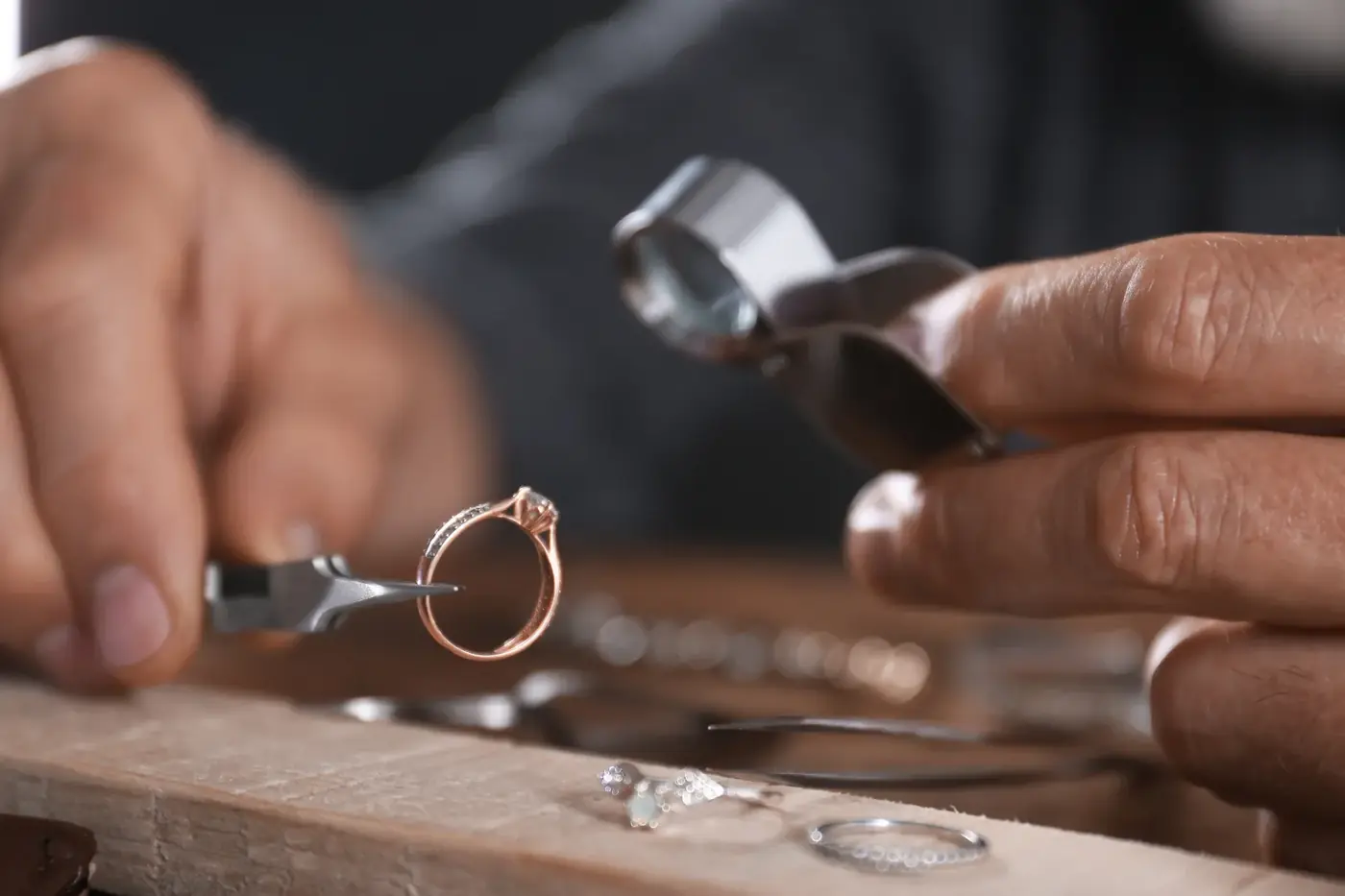
Metal and band: how the ring sits on the finger
Metal changes the colour of a solitaire and how it wears. Yellow gold looks warm, white gold and platinum look cool, and rose gold adds blush. Band width matters too. A thin band looks delicate, and a wider band looks bolder and may feel more secure on a larger hand.
Read our comparison of white gold and platinum if you are torn between cool metals.
Think ahead to the wedding band too. A solitaire with a low head can nestle against a straight band. A high head may call for a contour or a gap.
See our wedding bands to match the two.
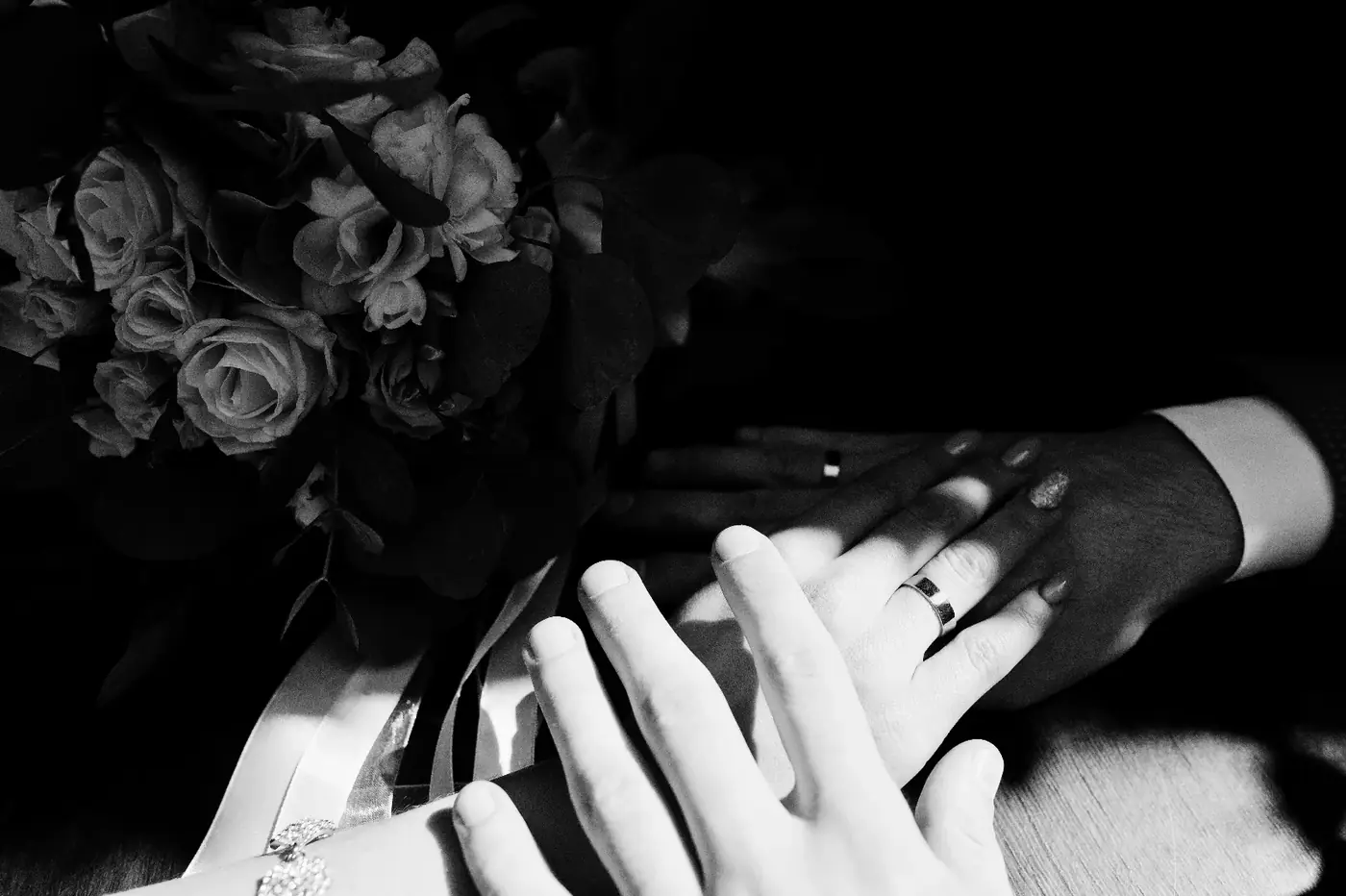
Natural or lab-grown for a single stone
In a solitaire, the centre stone is the whole ring, so the source matters to many people. We supply lab-grown and natural diamonds, and both can be set in the same designs. Lab-grown diamonds share the chemistry and crystal structure of natural ones. We help you compare them calmly, with no pressure either way.
Read the basics in our natural versus lab-grown guide, then see stones from both in person.
If you already own a diamond, we write jewellery appraisals and can reset it into a new solitaire.
Build your solitaire, then visit us in Markham
Try shapes, metals and heads in our 3D creator, then visit 7800 Woodbine Ave in Markham to see real stones. We build custom engagement rings and resize them to fit. A plain ring still deserves a careful conversation, and we are glad to have it with you.
Open the ring creator, choose a solitaire and adjust the head and band. Send us the design when it feels right, or bring a photo or a sketch.
Shoppers from across the city visit us for Toronto engagement rings as well as Markham. Our full engagement ring range shows the other styles.
Call (905) 475-1702 to book a time.
Questions, answered
What is a solitaire engagement ring?
A solitaire engagement ring has a single diamond set on a band, with no other stones. The simple design puts all attention on the centre diamond. It can use any shape, though the round brilliant is the most traditional choice, and the setting can be prong, bezel or another style.
How do I choose a solitaire engagement ring diamond?
Start with cut, because it controls how the stone handles light. Then balance carat, colour and clarity against your budget. Look at the stone in person under good light, and ask to compare two or three. We hand-pick our diamonds and explain the trade-offs plainly.
What makes a classic solitaire engagement ring different from other styles?
A classic solitaire engagement ring uses one stone and a plain or lightly shaped band. Other styles add halos, side stones or pavé. The classic form is simpler to wear, easy to match with wedding bands, and puts more weight on the quality of the one diamond.
Is a round stone the best choice for a solitaire?
It is the most traditional, but not the only choice. A round solitaire engagement ring uses a brilliant cut designed to return light in all directions. Ovals, emerald cuts and other shapes make beautiful solitaires too. The best shape is the one that suits the wearer's hand and taste.
How big is a 1 carat diamond solitaire engagement ring?
One carat is a weight of 200 milligrams, not a measurement of width. Two one-carat stones can have slightly different diameters depending on how they are cut. We measure the stone in millimetres so you can compare real dimensions rather than a weight alone.
Are four prongs or six prongs better for a solitaire?
Neither is better in every case. Four prongs show more of the diamond and give a squarer look to a round stone. Six prongs hold the stone with extra support and make it look rounder. We talk through your daily routine and recommend the head that suits it.
Can I choose a lab-grown stone for my solitaire?
Yes. We supply both lab-grown and natural diamonds, and either can be set in a solitaire. They have the same crystal structure and chemical composition, and differ in how they form. We show you stones from each so you can compare them side by side.
Book a private consultation
Tell us about one stone, nothing to hide: the solitaire engagement ring. Call (905) 475-1702 or visit 7800 Woodbine Ave in Markham, and a jeweller replies the same business day.
7800 Woodbine Ave, Markham, ON L3R 2N7
(905) 475-1702