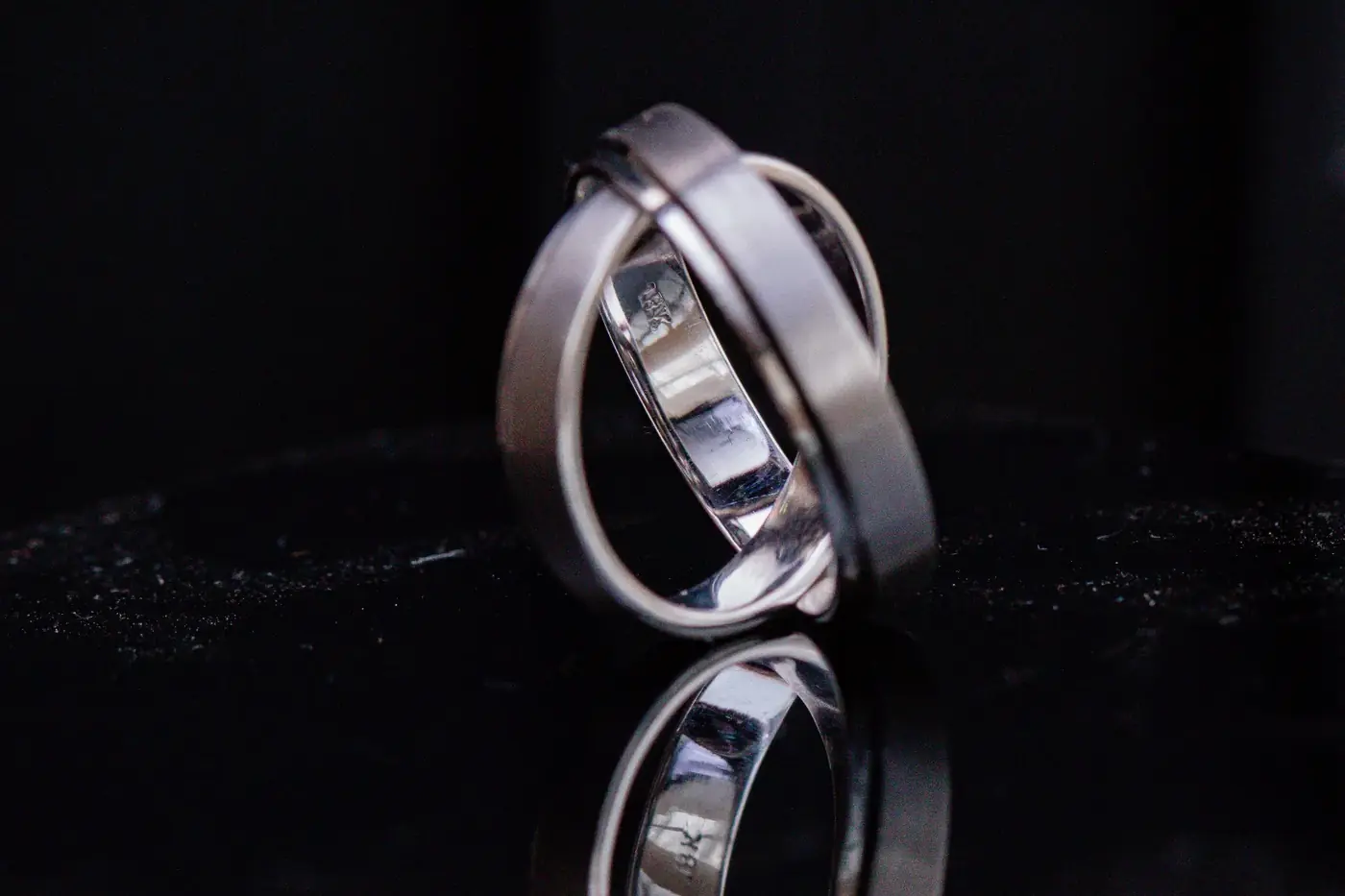
The wedding band womens hands settle into
Choosing a wedding band womens style starts with the engagement ring beside it. We explain metals, diamonds, widths and fit, then make or find the band you will wear for decades.
Start with the ring it will sit beside
Choose the engagement ring first, or at least know its height, shape and metal, because the band must sit beside it. A high setting needs a band with a gentle curve or a gap. A low setting lets a straight band sit flush. Bring the ring along when you shop, and come and try the pair together.
A band that touches the engagement ring every day wears against it. Hard stones can scratch softer gold, and prongs can snag a band with fine detail. Fitting them together avoids both.
Some engagement rings are designed with a matching band in mind. Others, such as a tall solitaire or a halo, leave a slight gap, so a contoured or notched band closes it.
If you are still designing the engagement ring, try our 3D ring creator and bring the result in. We can then plan the band around it from the start.
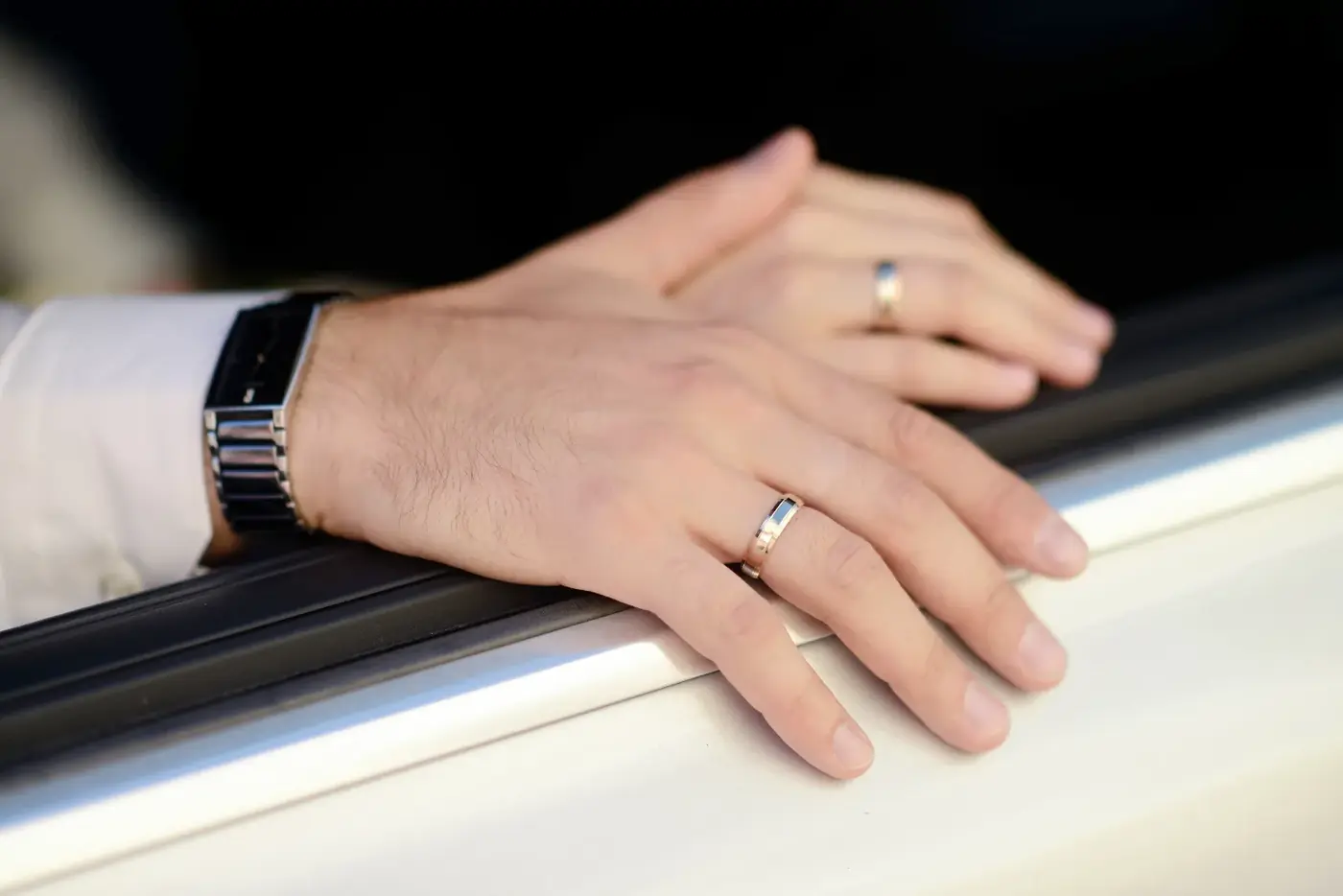
How a wedding band and ring for women are worn together
A wedding band and ring for women are usually worn on the same finger, with the band closest to the heart. The three common arrangements are a straight band, a contoured band that curves around the stone, and a stacked set of several thin bands. Each solves the height problem differently.
A straight band is the simplest. It works best when the engagement ring sits low, so the two lie flat against each other.
A contoured band has a curve that follows the stone and its setting. It closes the gap beside a tall centre stone and keeps the pair from rotating apart.
Stacking is looser and more personal, and it can grow with your life. Several thin bands in mixed metals or with small stones can be added over the years, marking dates rather than a single day.
| Arrangement | Best with | Watch for |
|---|---|---|
| Straight band | Low, flat settings | Gaps beside tall stones |
| Contoured or notched band | Tall solitaires, halos | Needs to be made for that ring |
| Stack of thin bands | Simple solitaires | Rubbing between metals of different hardness |
| Eternity-style band | Plain engagement rings | Harder to resize |
A women wedding band gold guide: colour and karat
A women wedding band in gold comes in yellow, white or rose, and usually in 10K, 14K or 18K. Karat measures gold purity out of 24 parts. Higher karat has a deeper colour and is softer, while lower karat is harder. Most women choose the metal that matches the engagement ring.
Yellow gold reads warm and classic. Rose gold has copper in the alloy and gives a soft pink cast. White gold is silvery and cool, and we cover it in its own section below.
Karat is a trade between colour and strength. 18K is 75% gold and the richest in colour. 14K is 58.3% and the usual balance. 10K is 41.7% and the hardest. Our guide to 10K, 14K and 18K gold has the detail.
You do not have to match metals. Mixing a yellow gold band with a white gold engagement ring is a deliberate look, as long as the ring settings allow it.
Choosing a wedding band with diamonds
A wedding band with diamonds can carry stones part way or all the way around. The setting decides how it wears. Pavé uses tiny stones held by small beads, channel sets stones between metal walls, and prong settings lift each diamond for more light. Fewer stones mean easier resizing and care.
Channel settings protect the stones and sit low, a sensible choice for daily wear. Pavé looks richer, with a surface of fine sparkle, but the beads should be checked from time to time.
A half-eternity band sets stones across the top only and leaves the lower half plain. This keeps the ring resizable and comfortable. A full eternity band has stones all the way around, which looks continuous but is harder to adjust.
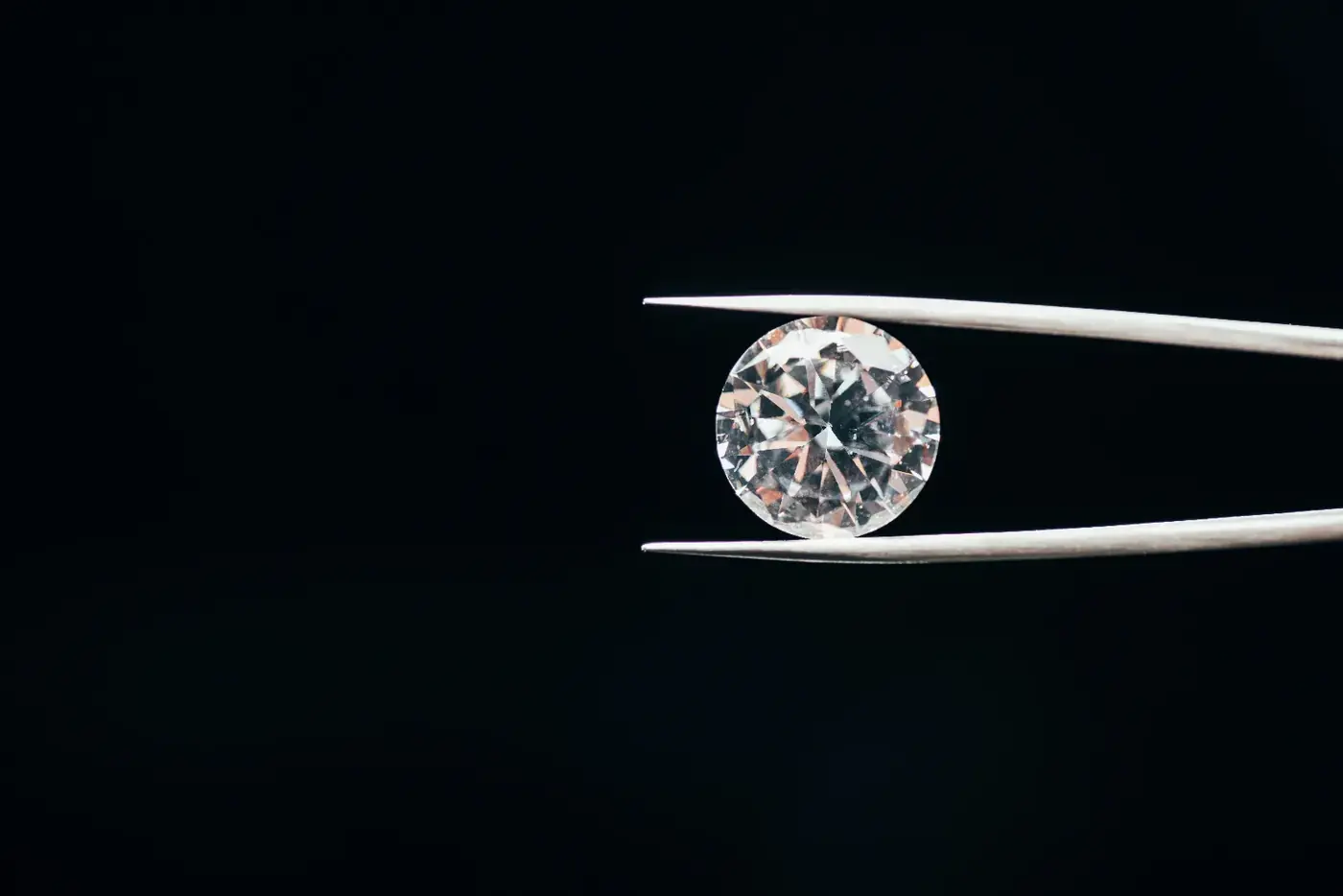
We hand-pick diamonds with the highest-quality cuts and explain quality against cost. Natural and lab-grown stones are both available. For how the two compare, read our guide to natural versus lab-grown diamonds.
The womens white gold wedding band explained
A womens white gold wedding band is gold mixed with paler metals and usually plated with rhodium for a bright finish. It matches diamonds well because its cool colour does not tint them. The plating thins with wear, and a jeweller can re-plate the band to restore it.
Pure gold is yellow, so white gold is made by alloying it with metals such as palladium or nickel. Many white golds still have a faint warm tint until plated.
If you wear a white gold band beside a white gold engagement ring, replate both at the same time so the colours stay matched. Mismatched plating is the most common reason two white rings look different.
Platinum is the other white option. It is naturally white and denser, and it wears differently. Our guide to white gold versus platinum compares them.
Width, profile and comfort for everyday wear
Womens bands commonly run from slim, about 2 mm, to broad, about 6 mm or more. Narrow bands look delicate and stack well. Wider bands carry more detail and feel more substantial. Pick the width by how the band sits beside your engagement ring and how it feels at the end of a day.
Very slim bands are lovely, but they bend and wear through sooner. A little more thickness gives the ring a longer working life.
Profile matters too. A half-round band feels smooth against the skin. A flat band feels modern. Comfort fit has a gently rounded interior that slides over the knuckle with less effort.
If you work with your hands, type or play an instrument, mention it, and ask us anything else about comfort. Those habits shape which width and setting will stay comfortable.
Fit, resizing and care
Try bands on at the end of the day, when fingers are slightly larger, and expect a wider band to need a little more room. We resize rings, though bands with stones all the way around are harder to adjust. Mild soap, a soft brush and care around chemicals keep a band bright.
Fingers change with heat, pregnancy, age and activity. A band that fits in winter can feel tight in July. See our guide to finding your ring size before you shop.
When a band no longer fits, our ring resizing service can adjust it, depending on the design. We also repair bands that have worn thin or loosened stones.
For a written valuation you can give your insurer, we write jewellery appraisals.
Seeing the bands in person
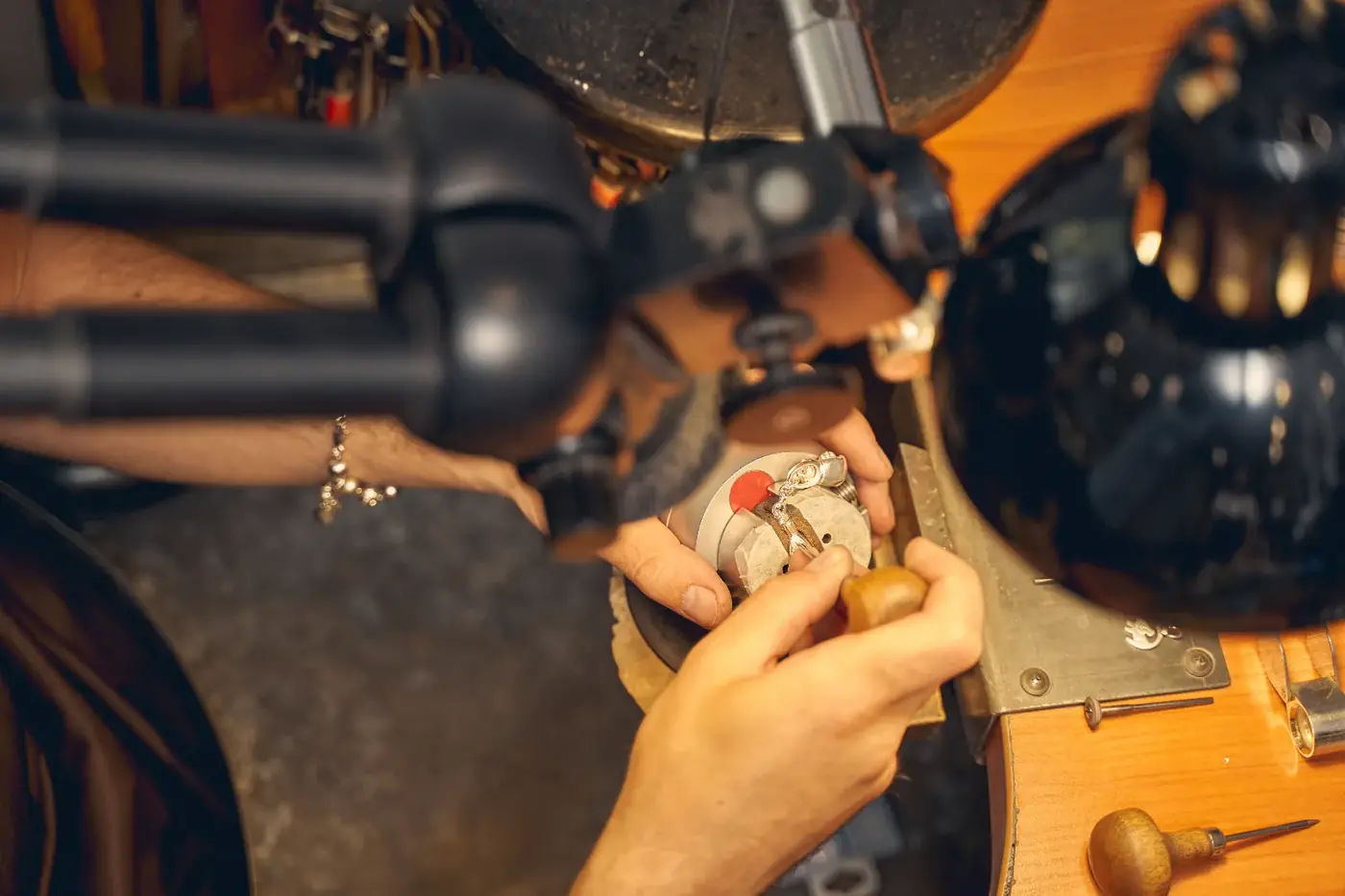
We are a family-owned jeweller at 7800 Woodbine Ave in Markham, serving the GTA for more than 30 years. We make custom wedding bands, and we encourage you to shop around and compare. Visiting means trying bands with your engagement ring on the same hand, with no pressure to buy.
Bring your engagement ring so we can see how each band sits beside it. We start with the ring and work outward, then talk through metal, width and stones. We explain what drives cost so you choose where it matters.
If you are shopping as a couple, see our mens wedding bands in the same visit, or browse the full wedding bands collection.
Call (905) 475-1702 or visit 7800 Woodbine Ave to start. Diamond pieces to wear with your band are covered on our diamond earrings page.
Questions, answered
What is the best wedding band womens style to wear with a solitaire?
A contoured or notched band suits a tall solitaire, because it curves around the setting and closes the gap. If the solitaire sits low, a straight band lies flat beside it. Bring the engagement ring when you try bands so we can see how they sit together.
Is gold or white gold better for a women wedding band gold choice?
Neither is better. It is a choice of colour and upkeep. Yellow and rose gold keep their colour without plating. White gold looks bright and silvery, but its rhodium plating thins over time and can be redone. Most women match the band to the metal of the engagement ring.
Can I get a wedding band with diamonds that is still easy to resize?
Yes, with a half-eternity style. Stones sit across the top and the lower half stays plain, so the band can be adjusted. Full eternity bands, with stones all the way around, are much harder to resize. Tell us your priority and we will suggest a setting.
Does a womens white gold wedding band need replating?
Usually, over the years. The rhodium plating on white gold wears thin, first on the underside of the band, and the metal underneath can show a faint warm tint. A jeweller can replate it to restore the bright colour. It is best to replate a matching pair together.
Should my wedding band match my engagement ring?
It should match in metal for the cleanest look, and ideally in height so the rings sit together. Width and detail can differ. Some couples intentionally mix yellow and white gold. Hard stones in one ring can scratch softer metal in another, so check how they wear together.
Can you make a custom band to fit around my engagement ring?
Yes. We make custom wedding bands, including contoured and notched styles made around a particular engagement ring. We discuss the metal, width and any stones, then sketch the design before making it. Bring the ring so we can match its height and curve.
How wide should a womens wedding band be?
Many womens bands run from about 2 mm to 6 mm. Slim bands look delicate and stack well, but they wear through sooner. A little more width gives strength and room for detail. Choose by how it sits beside your engagement ring and how it feels all day.
Book a private consultation
Bring your idea for the wedding band womens hands settle into to the counter at 7800 Woodbine Ave, call (905) 475-1702, or start here and we will reply the same business day.
7800 Woodbine Ave, Markham, ON L3R 2N7
(905) 475-1702