How to tell if gold is real, and when to stop guessing
Knowing how to tell if gold is real starts with a stamp and a magnet, but it ends with a jeweller's test. Here is what each check can and cannot tell you.
What real gold actually means
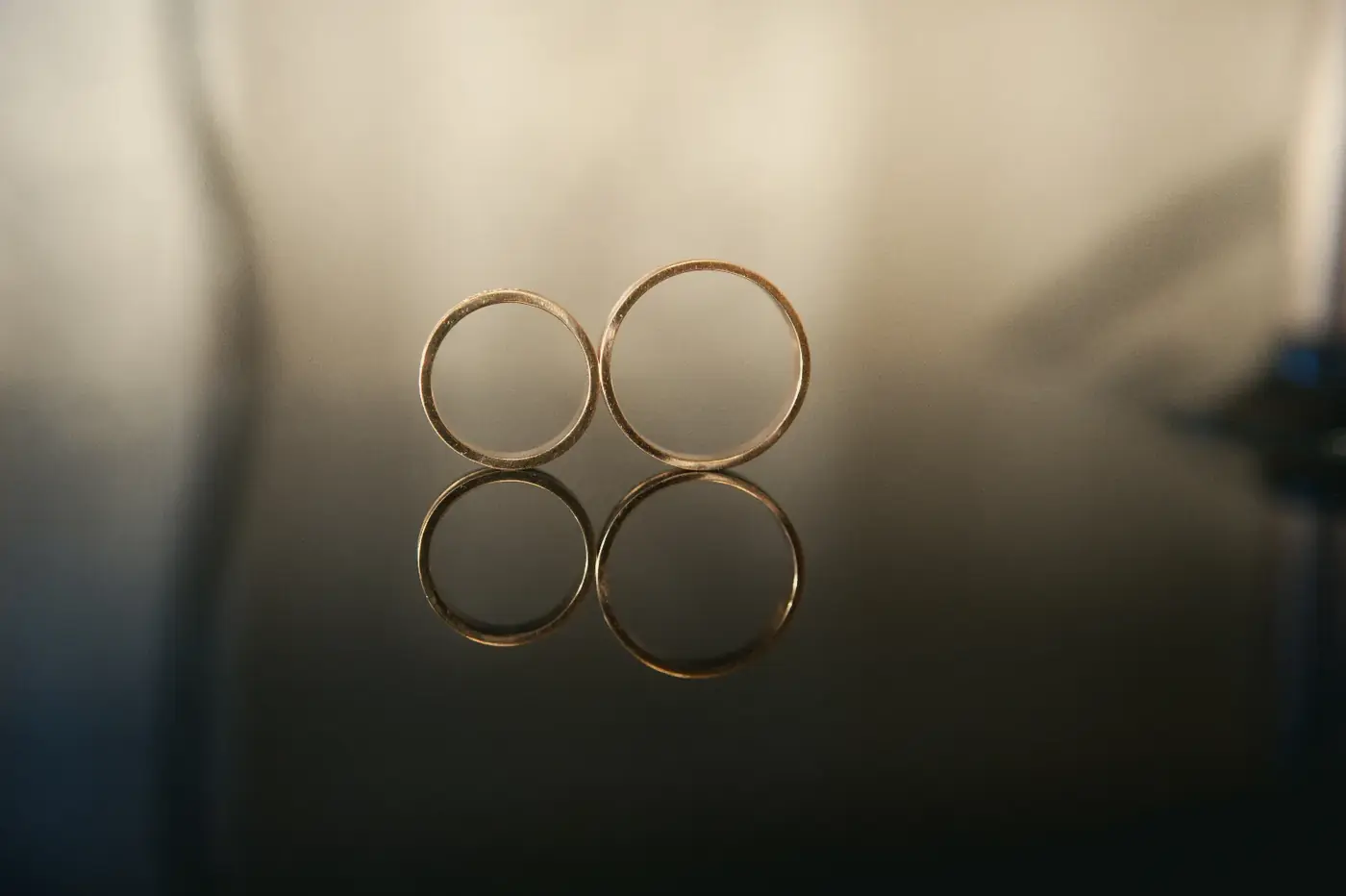
Real gold is gold alloyed to a stated purity, measured in karats. Pure gold is 24 karat and too soft for most jewellery, so pieces are mixed with other metals for strength. 18 karat is 75 percent gold, 14 karat is about 58.3 percent, and 10 karat is about 41.7 percent. All of those are real gold.
People often use the word real to mean 24 karat. That is not the right test. A 14 karat chain is genuine gold, just with more of other metals in the mix.
The opposite of real is not lower karat. The opposite is gold plated or gold filled, where a thin layer of gold sits over a base metal, or a piece that has no gold at all. Those are the cases you are trying to catch, and a calm, careful look is usually enough to start.
Our gold jewellery guide explains how karat, colour and wear fit together if you want the background first.
Reading gold hallmark stamps and karat markings
Look for a small stamp near the clasp, inside a ring band or on a tag. Gold karat markings read as 10K, 14K, 18K, or as three digits such as 417, 585 and 750. Under the Competition Bureau's rules, a gold article marked in karats must be at least 9 karat. A stamp is a clue, not proof.
Gold hallmark stamps in Canada work differently from the assay marks you may know from Britain. The Competition Bureau says quality marks on precious metal items are voluntary. If a mark is used, it must follow the Precious Metals Marking Act and Regulations, and a trademark must accompany it.
That trademark is worth a look. A karat number with a maker's mark beside it is a better sign than a bare number. Use a loupe or a phone camera zoom, because stamps are tiny and wear away on old rings.
No stamp does not mean fake. Older pieces, handmade work and some imports carry no mark. A stamp also does not prove real gold, because a plated item can be stamped too. Together, gold hallmark stamps and gold karat markings are your first clue, never the last word. Check the clasp on gold bracelets first, because that is where a stamp most often hides.
- 10K: often stamped 10K or 417
- 14K: often stamped 14K or 585
- 18K: often stamped 18K or 750
- Letters like GP, GF or HGE usually point to plating or gold fill, not solid gold

How to test gold at home: methods compared
Home checks fall into two groups: ones that cannot hurt the piece and ones that can. The stamp, a magnet and a close look at wear are safe. A ceramic streak or acid kit marks the metal and can ruin a plated or antique item. None of them gives a verdict you should sell or buy on.
Here is how to test gold at home, ranked from gentle to risky. Start at the top, stop when you have what you need, and never push to acid on a piece you care about.
| Check | What it can show | Main limit | Risk to the piece |
|---|---|---|---|
| Read the stamp | The claimed karat and a maker's mark | Stamps can be copied or applied to plated items | None |
| Magnet | A strong pull points to a magnetic base metal | Gold and many fakes are both non-magnetic, so no pull proves little | None |
| Look at wear | Different colour showing at edges and high points | A thick plating or a worn but real piece can look the same | None |
| Ceramic streak | A gold streak on unglazed ceramic versus a dark one | Needs experience to read, and it scratches the piece | Scratch on the surface |
| Acid kit | Whether gold content is above or below a tested karat | Hits only the surface and misreads layered pieces | Can damage plated or old items |
Why the magnet test fools people
A magnet only tells you one thing: whether the piece contains a magnetic metal such as iron. Gold is not magnetic, so a strong pull is a warning. But many fakes are non-magnetic too, and clasps or springs on real gold pieces can contain steel. A magnet can rule things out. It cannot rule gold in.
Use a strong magnet, not a fridge magnet, and test the chain itself rather than the clasp. A slight drag or a stuck clasp spring is not the same as the whole piece jumping to the magnet.
Brass, copper and many plated alloys will not react at all. That is why a passed magnet test feels reassuring and means very little.
Is my gold chain real? Clues specific to chains
Chains give you more clues than rings do. Check the clasp and the tag for a karat stamp, look at joins and the inside of links for a different colour, and notice how the chain has aged. Real gold keeps its colour at the edges. A chain that flakes or turns skin green is a sign of plating or base metal.
The question is simple: is my gold chain real? The answer sits in the details. Hollow links, solder points and spring rings are where wear shows first. If a coating is thin, you may see a pale or reddish metal peeking through at the bends.
Weight is another clue, though a rough one. Solid gold feels dense for its size, while a hollow or plated chain feels light. Compare it with a chain you already trust. Our gold chains page shows what solid links look like, and the gold chain types guide explains how each style is built.
Skin marks are not reliable on their own. Sweat, lotions and some alloys can cause a mark even on real jewellery. Treat colour changes as a prompt to test properly, not as a verdict.
Why home tests stay rough
Home tests are rough because most of them look at the surface only, and a surface can lie. Gold plating, gold fill and heavy electroplate can pass a stamp check, a magnet and a quick scratch. Acid kits are also open to user error. A jeweller's test is the reliable route, and it protects the piece.
Think about what you are really asking. If you test gold at home, you learn about the skin of the piece. You want to know what is inside it, and tests that touch only the surface answer a smaller question.
Acid kits are the most misused. They rely on reading how a streak reacts, and they need the right gloves, ventilation and technique. A deep scratch on a plated ring can expose the base metal and ruin it. The same caution applies to a necklace, so take gold necklaces with pendants or stones to a jeweller rather than scratching them.
Professional methods such as electronic testing and X-ray fluorescence analysis read the metal more accurately and, in the case of X-ray analysis, without cutting into the piece. That is why people with a real decision to make go to a jeweller.
A home test can raise a doubt. A jeweller's test settles it.
Getting gold testing in Toronto and the GTA
If you search for gold testing toronto, you will find jewellers, pawn shops and gold buyers. Ask what method they use, whether they test in front of you, and whether the test marks the piece. Compare more than one opinion before you sell, and never hand over a piece you cannot watch being tested.
Be clear about who benefits from the answer. A buyer who tests your piece may also want to buy it. A jeweller who does not buy gold has no stake in the result.
We are a family-owned jeweller in Markham with more than 30 years serving the GTA, and we handle gold every day in custom pieces and jewellery repair. A jeweller can test your gold, so bring the piece in to 7800 Woodbine Ave or call (905) 475-1702 and we will talk it through. Ask anything, with no pressure.
Whoever you choose, ask for the result in writing if money is changing hands, and keep the piece in view the whole time.

What to do before you buy or sell gold
Before money changes hands, get the karat stated on the receipt, check the stamp with a loupe, and have anything expensive or old looked at by a jeweller. Ask where the piece was made and who stands behind it. Shopping around is sensible, and a good seller will not mind you comparing.
For a new piece, the receipt matters as much as the stamp. It should name the metal and the karat. If it says only gold with no karat, ask why.
Inherited pieces are different, and often carry more than metal. Mark nothing, clean nothing and bring them as they are, because a good look matters more than a shine. We also write jewellery appraisals when you need a piece described on paper.
If you are planning a new design from old gold, our custom jewellery page explains how that conversation starts. For an engagement ring, you can also explore metals and stones in our 3D ring creator first.

Questions, answered
How do you tell if gold is real?
The easiest first step is to read the stamp with a loupe. Look for 10K, 14K, 18K or 417, 585, 750 near the clasp or inside the band. It is only a clue, because plated items can carry stamps too. For a reliable answer, have a jeweller test the piece with proper equipment, ideally while you watch.
Does real gold stick to a magnet?
No, real gold does not stick to a magnet. If a piece is strongly attracted, it contains a magnetic metal and is not solid gold. But a piece that does not react could still be brass, copper or plated, so a passed test proves very little. Treat the magnet as a quick way to rule things out, never to rule gold in.
Can a fake gold chain have a karat stamp?
Yes. A karat stamp can be applied to a plated or counterfeit chain, so a stamp alone does not prove it is solid gold. A genuine stamp usually comes with a maker's mark or trademark beside it, which the Competition Bureau says must accompany a quality mark. Even then, only a proper test of the metal confirms what is inside.
Is the acid test safe to do at home?
It is not the safest choice. Test acids are corrosive, need gloves and eye protection, and require a scratch on the piece that can damage plated or antique items. They also misread layered metal, because they react with the surface. If the piece matters, leave acid to a jeweller, who can test it with more control.
Does 10K gold count as real gold?
Yes. 10 karat gold is real gold, about 41.7 percent gold mixed with other metals. In Canada, a gold article marked in karats must be at least 9 karat to carry the mark. It is harder and usually cheaper than 14K or 18K, but it will look less rich in colour and may be less suited to some skin sensitivities.
Where can I get my gold tested in the GTA?
Jewellers, gold buyers and pawn shops across Toronto and the GTA test gold. Ask what method they use, whether they test while you watch, and whether the test marks the piece. If you want an opinion with no stake in buying it, choose a jeweller who is not buying your gold. Bring the piece to 7800 Woodbine Ave in Markham or call (905) 475-1702.
How can I test gold at home without damaging it?
Stay with the safe checks. Read the stamp with a loupe, hold a strong magnet near the piece, and look for a different colour at edges and links. These cannot mark the metal. Skip acid and scratch tests on anything plated, antique or valuable. Home results are rough, so take any real doubt to a jeweller for a proper test.
Book a private consultation
Planning how to tell if gold is real, and when to stop guessing? A short note is enough to begin. Use the form, call (905) 475-1702, or visit us on Woodbine Avenue in Markham.
7800 Woodbine Ave, Markham, ON L3R 2N7
(905) 475-1702