How to tell real pearls from fake, step by step
Knowing how to tell real pearls from fake comes down to a handful of tests you can run in minutes. This is a testing guide: what each check reveals, where it misleads, and when to hand the strand to a jeweller.
What you are actually testing for
You are testing for nacre, the layered mineral coating a mollusc deposits around an irritant. Real pearls, natural or cultured, are built of nacre. Imitations are glass, plastic or shell beads with a coating. Every test below is a way of telling a living layered surface from a manufactured one.
Cultured pearls count as real. Human help starts the process, but the mollusc still makes the nacre. So the question is never whether a farm was involved, only whether a mollusc grew the pearl.
GIA describes pearls as organic gems, which explains why they are softer and more varied than a mineral such as diamond.
The tooth test, and why it works
Rub the pearl lightly across the biting edge of a front tooth. Real nacre feels faintly gritty, like fine sand, because its crystals are microscopic plates. Glass and plastic feel perfectly smooth and slide. Use a light touch and clean the pearl afterward.
The test is old, and it is reliable when you do it carefully. Press gently, because hard rubbing can scratch a thin coating or a soft pearl.
Be aware of limits. Some imitations are given a rough, pearly coating, and a heavily polished real pearl can feel smoother than expected.
Reading surface and lustre under light
Look at the surface in bright light, ideally with a loupe. A real pearl shows tiny natural marks, small ridges and slightly different shapes along a strand. Imitations look flawless and identical. Lustre in a real pearl glows from just under the surface, while a fake has a flat, glassy reflection.
Turn the pearl slowly under a window. Real nacre shows soft colour overtones, such as rose or green, moving across the surface.
Compare pearls along a strand. A perfectly uniform row, with no variation in size or tone, is a warning sign rather than a mark of quality.
Nacre layers: the structure behind every test
Nacre is made of stacked, microscopic platelets of aragonite bound by a protein. Light bounces between the layers, which is where a real pearl's soft glow and shifting colour come from. A coating on a bead is a single flat film, so it cannot reproduce that depth, however good it looks.
The layering also explains the gritty feel on a tooth, since the platelet edges are rough at a tiny scale.
Cultured pearls vary in how much nacre they carry. A thicker coat lasts longer and glows more deeply, while a very thin coat can wear through with age and show the core.
If you notice a pearl wearing thin at the hole or the surface, it is worth a closer look by a jeweller.
Drill holes, weight and temperature
Examine the drill hole under magnification. A real pearl has a clean, small hole with nacre layers visible at the rim. A coated bead shows chipped paint or a different core. Real pearls also feel cool and heavier than plastic, which warms quickly in the hand.
Hold two pearls and compare them, if you can. Weight differences are easier to feel side by side than to judge from one.
Look at the strand's knots and thread too. Matching, even knots between each pearl are a sign of careful stringing, not authenticity by themselves.
- Cool to the touch, then slowly warming: typical of real nacre.
- Light and warming fast: typical of plastic.
- Flaking or peeling at the hole: coating over a bead.
- Layers visible at the rim: nacre.
Real pearl vs fake pearl, test by test
This table sets a real pearl vs fake pearl against each test. Use it as a checklist and tally the results. One surprising result proves little, but a strand that fails three tests is almost certainly imitation, and a strand that passes all of them deserves a professional look.
High quality imitations improve every year, which is why combined results matter.
| Test | Real pearl | Fake pearl |
|---|---|---|
| Tooth | Slightly gritty | Smooth and glassy |
| Surface | Small natural variations | Uniform and flawless |
| Drill hole | Clean, layered edge | Chipped coating |
| Weight | Heavy and cool | Light and warms |
| Lustre | Deep glow, soft overtones | Flat mirror shine |
| Strand | Slight size differences | Identical beads |
The imitation types you are likely to meet
Most fakes fall into three groups: glass beads dipped in a pearly coating, plastic beads with the same finish, and shell-based beads, often called shell pearls, made from ground shell and resin. Each can look convincing at arm's length. Under a loupe and in the hand, they behave differently from nacre.
Glass imitations are heavy and cold, but they feel smooth on a tooth. Plastic ones are light and warm up fast.
Shell pearls are denser and can pass a weight test, yet their surface is too even and the lustre too uniform.
None of these are cultured pearls. A cultured pearl has grown inside a mollusc, however it was started.
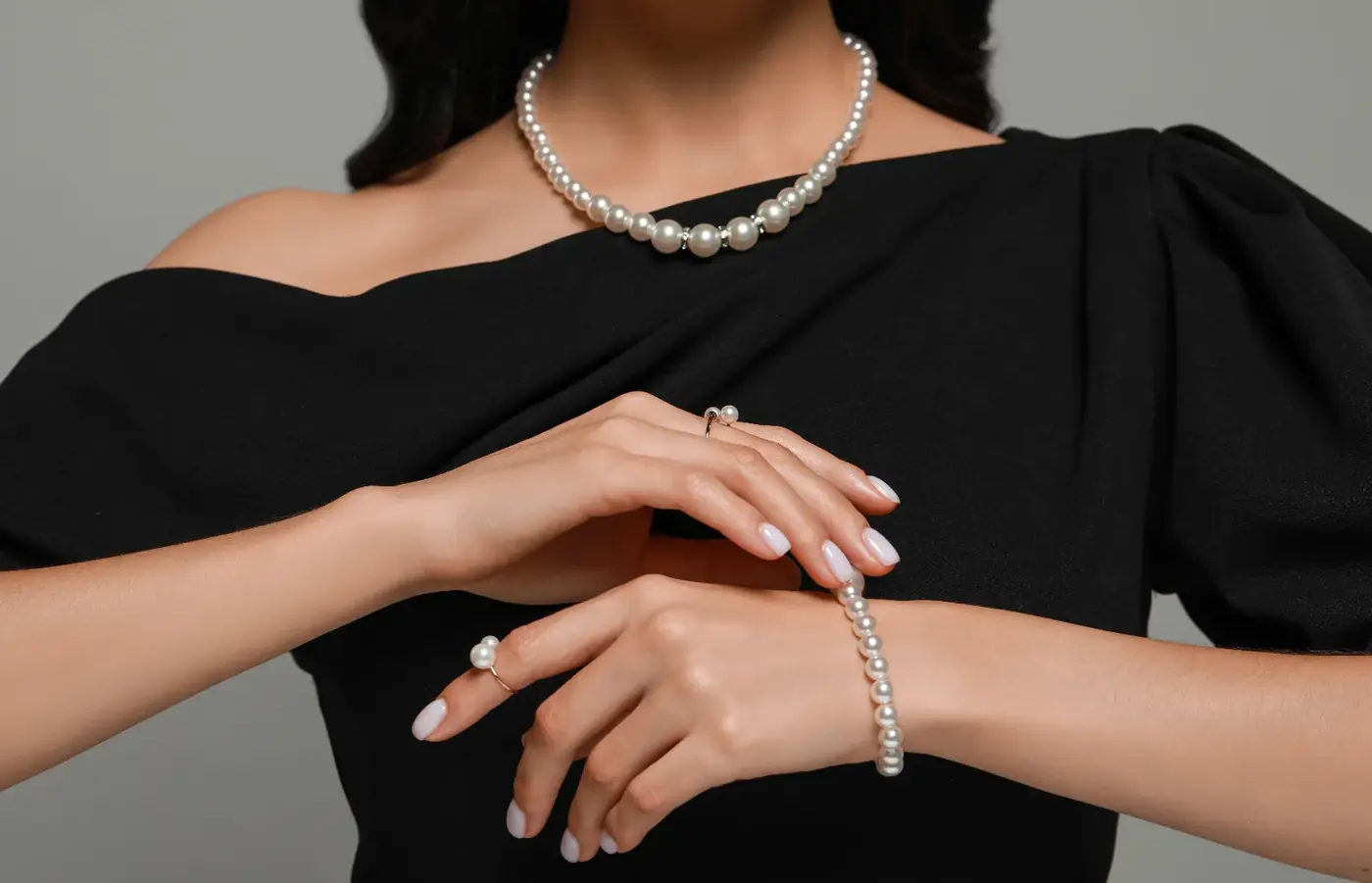
Pearl types and how they change what you see
Knowing pearl types stops you from rejecting a genuine strand. Akoya pearls are round and bright, freshwater pearls vary widely in shape, South Sea pearls are large with a satin glow, and Tahitian pearls run dark. Irregular shapes and colour differences are normal in genuine pearls.
The contrast between freshwater vs saltwater pearls matters in testing. Freshwater strands are often less round and more varied, so an uneven strand is not a red flag.
Saltwater pearls such as Akoya are usually rounder, so a perfectly round strand at a suspiciously low price deserves a second test.
Strand length is a style choice and does not help to prove authenticity. A pearl necklace length such as a princess or an opera tells you nothing about whether the pearls are real.
A sensible order to run the tests
Start with the least invasive checks and move on only if you need more. Look first, then feel the weight, then check the drill hole under magnification, and use the tooth test last. Write the result of each check down. Three consistent results are far more useful than one strong impression.
Begin in good daylight, on a plain white cloth, so colours and overtones show clearly.
Check a single pearl from the middle of the strand, not the clasp end, since the ends are handled and worn most.
If the results disagree, stop testing and ask for a professional opinion. There is no shame in asking. More rubbing will not settle it, and it risks marking a good pearl.
When to ask a jeweller to confirm
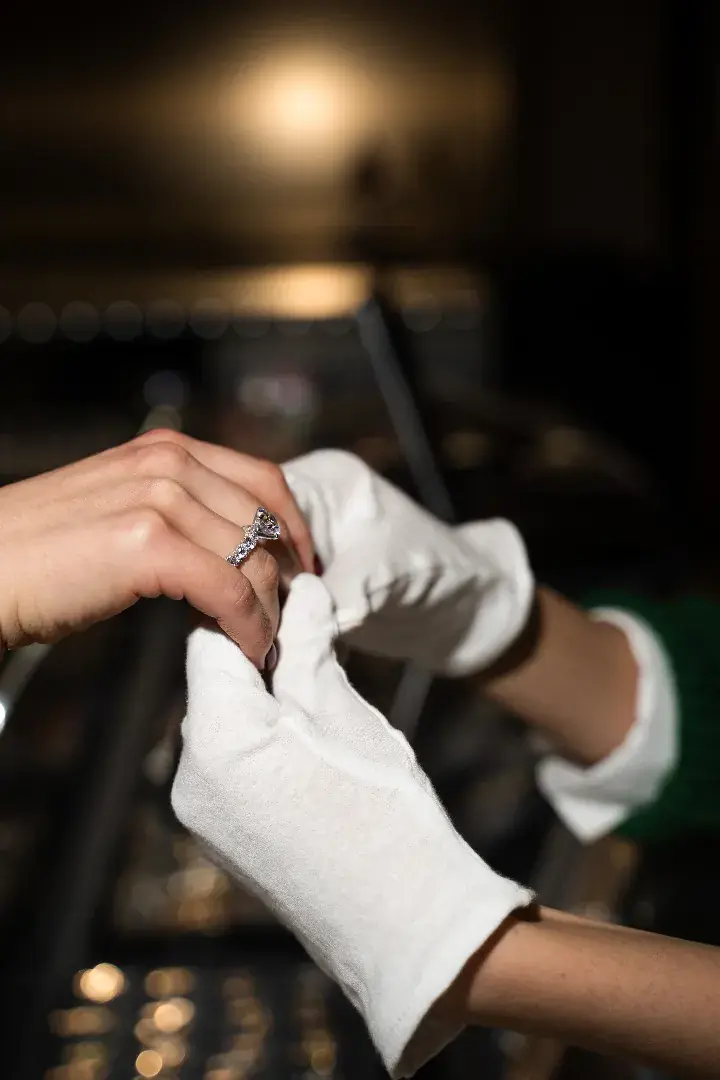
Ask a jeweller when the pearls are inherited, valuable, sentimental, or when your tests disagree. Home checks screen out obvious fakes but cannot tell natural from cultured, detect dyes or coatings, or give a value. A jeweller can examine the strand under magnification and write an appraisal.
We write jewellery appraisals, so a strand can be documented for insurance and for your own records. See our jewellery appraisal page.
If a strand has a loose clasp or a broken thread, bring it in. We repair necklaces and can restring a strand so it stays wearable.
Visit 7800 Woodbine Ave in Markham or call (905) 475-1702, and we will tell you plainly what we see. A strand from a grandmother deserves a careful look.
Tests to avoid, and how to protect a good strand while testing
Skip acid, flame, scratching with a pin and soaking tests. They can destroy a real pearl's nacre and prove nothing a gentler test cannot. Stay with the tooth, loupe, weight and hole checks. Wipe the strand with a soft cloth afterward and store it flat.
Heat can crack nacre and discolour the thread. A pin scratch leaves a permanent mark on a real pearl.
For general upkeep, our guide to cleaning jewellery at home explains what is safe.
For pearl styles after you have confirmed what you own, our pearl earrings page shows the finished look.
Questions, answered
How can you tell if pearls are real at home?
Rub the pearl gently across a front tooth: real nacre feels gritty and glass or plastic feels smooth. Check the drill hole for clean layers, feel for cool weight, and look for small natural variations and soft colour overtones. Trust the combined results, not any single test.
What is the difference between a real pearl and a fake pearl?
A real pearl, natural or cultured, is made of nacre laid down by a mollusc. A fake is a glass, plastic or shell bead with a coating. Real pearls feel gritty and cool, show small differences and have clean drill holes. Fakes are uniform, smooth and often chip at the hole.
Are cultured pearls real pearls?
Yes. A cultured pearl is grown by a mollusc, with human help to start the process, and is made of real nacre. Almost all pearls sold today are cultured. They are not imitations, so a strand being cultured says nothing against it.
Do pearl types look different when you test them?
Yes. Akoya pearls are round and bright, freshwater pearls vary in shape, South Sea pearls are large with a satin glow and Tahitian pearls are naturally dark. A genuine strand can look irregular, so use pearl types as context before judging the results of a test.
Does it matter if pearls are freshwater or saltwater?
Both are real. Freshwater vs saltwater pearls differ in the mollusc and typical look: freshwater pearls vary more in shape and colour, while saltwater pearls are often rounder. That affects what you expect to see, not whether the pearls are authentic.
Can a jeweller confirm whether my pearls are real?
Yes. Bring them to 7800 Woodbine Ave in Markham or call (905) 475-1702. We can examine the strand under magnification, tell you what we see, and write a jewellery appraisal if you want it documented. We also repair necklaces and restring loose strands.
Book a private consultation
Questions about how to tell real pearls from fake, step by step? Send the form, ring (905) 475-1702, or drop by 7800 Woodbine Ave. A real person writes back, usually within the business day.
7800 Woodbine Ave, Markham, ON L3R 2N7
(905) 475-1702